Baumer Introduces Complete Line of Capacitive Sensors
April 29, 2009 by Editor
Filed under Liquid Level
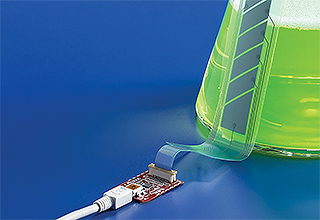
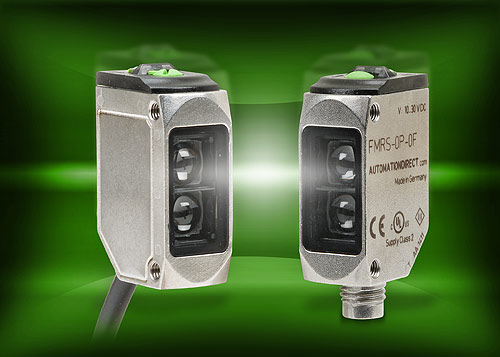
Southington, Conn. — Baumer has introduced a complete line of Capacitive Sensors capable of penetrating through packaging materials such as plastics, glass, cardboard, foam, and other substrates. These sensors are available in a range of housing sizes and designs, and offer extended sensing distances to facilitate installation.

Installed outside of container walls, Baumer Capacitive Sensors do not require direct contact with the target substrate, a feature that protects the sensor from damage and ensures process safety and sensor life expectancy. This non-invasive method of detection also ensures that the sensor’s housing cannot contaminate the target material.
Baumer Capacitive Sensors are available in cylindrical, rectangular and special designs. Models are available for use in limited space applications, and for performance in ambient and elevated temperatures. Possible target substrates include plastics, glass, ceramics, porcelain, clay, stone, wood, paper, cardboard, pellets, powders, and foods. These sensors are used in packaging, PCB fabrication, printing, rubber/plastics fabrication, robotics and handling, transportation, warehousing, food and drug processing, medical device manufacturing, cosmetic production, wood processing, metalworking, oil and gas processing, water treatment, and textile production.
Baumer
www.baumerelectric.com/usa
TURCK’s Terminal Chamber for uprox®+ Sensors
April 20, 2009 by Editor
Filed under Industry News
Comments Off
Minneapolis, Minn. – TURCK introduces an integrated terminal chamber for its line of uprox®+ sensors that conforms to FDA requirements for washdown environments, including food and beverage industry applications such as dairies, breweries and bakeries. This terminal chamber includes removable terminals for quick and easy mounting using screws or cage clamps. Furthermore, by simply rotating the cover by 180 degrees, the user can select either a straight or 90-degree cable exit.
TURCK’s uprox+ line of factor 1 sensors detects all metals at the same rated distance and meets the requirements for food-safe materials. The sensors are available in 12, 18 and 30 mm stainless steel barrels with a liquid crystal polymer (LCP) front cap that is impermeable to cleaning agents, disinfectants, high pressure and steam cleaning.
Banner U-GAGE® M25U Ultrasonic Sensors
April 16, 2009 by Editor
Filed under Ultrasonic
Minneapolis, MN—Banner Engineering Corp. introduces U-GAGE® M25U Ultrasonic Sensors, opposed mode ultrasonic sensor pairs specifically designed for use in sanitary environments. The sensors, rated IP69K, IP67 (NEMA 6), are constructed of heavy-duty 316 stainless steel, allowing them to withstand the recurring high-pressure washdowns, severe temperatures, and aggressive cleaning chemicals common in food and beverage applications.

With a smooth barrel housing—free of threads, gaps or seams that could accumulate debris—M25U sensors allow for thorough cleanup with minimal effort. Additionally, IP68-rated washdown cordsets and FDA compliant brackets are available to further ensure reliable, long-lasting performance in the harshest environments.
M25U sensors can be wired for either normal or high speed. Normal speed offers a longer sensing range, while high speed provides a shorter response time, ideal for high-speed counting applications.
An Alternative to Vision Systems: A Touch Screen Image Sensor
March 12, 2009 by Editor
Filed under Image, Photoelectric
by Brent Evanger, Banner Engineering, Sr. Application Engineer—Vision Sensors
When an inspection application requires more sophisticated data acquisition than that provided by a traditional photoelectric sensor, many application engineers will choose a vision system. Through it, they can obtain image-based data and identify label orientation, part presence and arrangement, and other features. But for some of these applications, a full vision system may not be required. Instead, you can use a compact touch screen image sensor with no PC or additional electronics required.

Label Orientation: The touch screen image sensor lets you set inspection parameters on the spot, and then examine a target object, such as a salad dressing bottle, to verify label placement and orientation.
A touch screen image sensor can combine the capabilities of three separate sensors into one housing. One sensor is a match sensor. It compares the target object to a stored reference point, identifying parts of irregular shape, alphanumeric characters, etchings and labels at rapid production speeds. An area sensor identifies target features within a region of interest, ideal for detecting drilled holes on a metallic component or inspecting blister packs, and verifies that all
features are correctly sized and located. The third sensor has a similar purpose—examining an area for specific features—but offers tools that adjust for motion.

Drilled Hole Inspection: The image sensor features integrated lighting to create contrast between target features (drilled holes) and their background (metal plates), allowing any reject parts to be readily identified.
These tools allow the sensor to detect objects of varying position and orientation on the production line. The image sensor also incorporates integrated lighting and adjustable lenses to optimize image contrast, as well as accommodate changing plant conditions.

Injection Molding Verification: Once the sensor is programmed, it compares the obtained image—in this case, a plastic container—to a reference pattern, confirming its size and shape match the parameters set. If the target object fails this inspection, it is rejected from the production line.
The sensor’s touch screen LCD display is used for setting up an inspection and modifying parameters. Once you select the sensor type (match, area, or area with motion), it captures a sample image. From this point, you configure the sensor by adjusting the region of interest, setting inspection parameters, and designating the minimum and maximum pass count. The final setup configuration and logged inspection results can be downloaded from the sensor to a USB drive through the sensor’s USB port. To minimize system downtime, you can set new application parameters offline through the sensor’s software emulator, and then upload these new configurations onto the sensor using the USB drive.
Banner Engineering
www.bannerengineering.com
Designing with Thermistors
March 11, 2009 by Editor
Filed under Temperature
John R. Gyorki, Editorial Director
Temperature sensor applications usually fall into one of three general categories; monitoring, control, or circuit compensation, and four sensor types; thermocouples, thermistors, resistance-temperature detectors (RTD), and semiconductor temperature sensors. When selecting a sensor, some key characteristics to consider include temperature range, accuracy, response time, minimal temperature effect on the measured object, and the type of signal conditioning required. Other factors are long-term stability, mechanical ruggedness, and cost.

Unleaded NTC thermistor discs are frequently used in numerous automobile engine sensors to measure air and coolant temperature. The discs are located inside the tip of the housing, usually under a spring-load to maintain contact pressure.

The table compares thermistor characteristics with other types of temperature sensors and shows that thermistor devices are essentially passive variable resistors and require excitation current to produce an output signal. In other words, you cannot just connect a voltmeter across the leads of a thermistor, touch the sensor to a hot object, and expect to see a voltage.
Thermistors have a considerably higher sensitivity than most other sensors, but they are also much less linear. Although special high-temperature sensors, such as chromium oxide ceramic thermistors made by GE Sensing can operate up to 1000oC, conventional devices have a relatively narrow temperature range and are not an optimal choice when long-term accuracy is required. However, thermistors are usually less expensive than the other sensors and react faster to temperature changes.
All sensors require linearization, but each to a different degree. Also, to achieve high accuracy the circuit must be calibrated with the actual thermistor sensor connected. These two tasks can be accomplished with analog conditioners and calibration circuits, but they can be quite complex and require manual calibration. If a digital design is used instead, the sensor signal is digitized by an analog-to-digital converter (ADC) and the linearization and calibration are done in software with
minimum operator involvement.
Thermistor Fundamentals
Thermistors are solid-state, temperature-sensitive resistors that come in two types: negative temperature coefficient (NTC) and positive temperature coefficient (PTC). As the names imply, the resistance of an NTC thermistor is inversely proportional to temperature, whereas the resistance of a PTC thermistor is directly proportional. The sensors’ terminal resistance changes with the temperature change of the thermistor body, which can come from ambient heat, self-heating due to excitation current, or both.
PTC thermistors are used most often for circuit-overload protection, compared to NTC devices that are used primarily for temperature measurement and compensation. This article focuses on temperature measurement devices, so only NTC thermistors are discussed.

The resistance of an NTC thermistor decreases with an increase in its body temperature, however, the rate of resistance change is not linear. It is greatest at the lower temperature limit and gradually diminishes as the temperature increases.
NTC thermistors are a sintered mixture of metallic oxides, which include nickel, cobalt, manganese, and sometimes other oxides. The elements are formed as beads, chips, discs, rods, or thin-films. Bead thermistors are drops of semiconductor paste deposited on two platinum alloy wires, sintered at a high temperature. The wires are then cut to make individual thermistors. Chip and disc thermistors are fabricated as a thin sheet of material (wafer), and sintered at high temperature. The sides are silvered for attaching leads, and the wafers are cut into discs or chips. Rod thermistors are simply extruded.
Thermistor elements can be glass encapsulated, epoxy coated, or remain uncoated (bare). Bare thermistors respond faster, are smaller, and cost less, but they have no provisions for protection from the environment and mechanical impact. An epoxy coating can protect the device from the environment, but it slightly slows the response time and increases the cost. Glass encapsulation ensures a hermetic seal, high-voltage insulation, and resistance to corrosive atmospheres. Long-term stability of glass encapsulated parts is typically ten times better than the stability of epoxy coated parts.
Mounting features include unleaded discs that require spring-loaded contacts, silver or gold electrodes for wire bonding, and surface mounting provisions such as those for SMD chips. The leads can be axial or radial, bare or insulated, and straight or kinked. Axial lead and SMD parts are intended for automatic PCB insertion and pick-and-place equipment. Radial-lead devices and unleaded discs are well suited for temperature probe assemblies.

An unleaded NTC disc thermistor (a.) is commonly found in temperature probes. Adding radial leads to an uncoated disc thermistor (b.) lets it mount on a printed circuit board. Coating the disc thermistor with epoxy (c.) protects it from the environment. Epoxy-coated chip thermistors with flexible insulated leads are ideal for installations with limited space.
(Photos courtesy of GE Sensing & Inspection Technologies, Billerica, MA.)
One special type, thin-film thermistors, are deposited on a ceramic or flexible Kapton® base, only several tens of thousands of an inch thick. They have low dissipation values and fast reaction times due to their small mass. For example, TF series of thin-film NTC thermistors from Selco Products Company, are suitable for a -50oC to +90oC temperature range and have a dissipation value of 0.7 mW/oC with a thermal time constant of 2 s, both in still air. They are ideal for air and other gas temperature measurements as well as probe assemblies.
Accuracy ratings vary greatly between different devices, depending on the application. For example, general-purpose disc thermistors typically have tolerances that range from ± 20% to ± 2%, and interchangeable thermistors can have accuracies as high as ± 0.05oC in a narrow temperature range. They are available for probe replacement without system recalibration. For example, U.S. Sensor’s PR103J2 ultra-precision, interchangeable 10-kΩ thermistor is a highly accurate and stable sensor that matches the J-type NTC thermistor’s R-T curve with ± 0.05oC accuracy from 0oC to 50oC. Other resistance values from 2 kΩ to 50 kΩ are also available.
Several thermistor-related terms that are listed in catalogs and data sheets can help you select parts:
• The zero-power resistance, Ro, is a dc resistance specified at a particular temperature and an excitation current so small that the self-heating produced by power dissipation can be neglected. This special temperature is called the Standard Reference Temperature, and is typically 25oC.
• The resistance ratio characteristic is a ratio of zero-power resistance measurements made at two specific temperatures. It is typically the ratio of resistance at 25oC to the resistance at 125oC.
• The thermal time constant, τ, is the time in seconds required for a thermistor that dissipates zero power to change its body temperature 63.2% of the total temperature change in response to a step-function change in ambient temperature. This parameter characterizes the speed with which a thermistor can react to fast temperature changes and helps compare the response time of different devices.
• The dissipation constant, δ, is a ratio of the change in thermistor power dissipation to the change of thermistor body temperature. It is measured in mW/ oC and is specified at a certain temperature. Both τ and δ depend strongly on the measured object or media. For example, the dissipation constant of a GE type DC95 interchangeable chip thermistor is 8 mW/oC in stirred oil, but is only 1 mW/oC in still air. The thermal time constant is 1 second in stirred oil, but is ten times longer in still air.
• The maximum power rating is another characteristic related to power dissipation. It is the maximum power in mW at an ambient temperature of 25oC that a thermistor can dissipate for an extended period of time without degrading its characteristics. This rating must be derated based on the ambient temperature.
• The zero-power temperature coefficient of resistance (TCR), α, is the ratio of the rate of change of zero-power resistance at any temperature point, T, to the zero-power resistance at that point:
αT = 1/RT (dRT)/(dT)
Where:
αT = temperature coefficient of resistance at temperature T,
Ω / Ω / oC, or %/ oC
RT = resistance at temperature T, Ω
dRT = change of resistance, Ω
dT = change of temperature, oC
Another way to express the temperature coefficient is:
αT = – B/T2
Where:
B = material constant, oK
T = temperature, oK
Unfortunately, thermistor temperature coefficients are highly non-linear over their operating range, which means that the coefficient itself varies somewhat with temperature. A coefficient is at its highest value at its lowest temperature limit and gradually decreases as temperature increases. One value of a particular coefficient might work for a narrow temperature range, but most often, thermistor measurement circuits must be linearized to cover large temperature swings.

By simply adding one resistor in series with the thermistor, the output voltage vs. temperature curve can be linearized. When resistance vs. temperature linearization is desired, the resistor should be connected in parallel with the thermistor.
Circuits for linearizing thermistor outputs can be comprised of series, parallel, and series-parallel combinations of fixed resistors and additional thermistors. The simplest circuit is a parallel resistor, the value of which can be calculated from the following equation:
R = [RTM(RTL + RTH) – 2RTLRTH] / [RTL + RTH – 2RTM]
Where:
R = value of parallel resistor, Ω
RTL = thermistor resistance at the lowest temperature TL, ?
RTH = thermistor resistance at the highest temperature TH, Ω
RTM = thermistor resistance at the midpoint temperature TM, Ω
Midpoint temperature TM = (TL + TH) / 2, °C
Simple on/off temperature control circuits and applications with a narrow temperature range and relaxed accuracy requirements usually do not need linearization. A simple Wheatstone bridge circuit is usually quite adequate. Another example that does not require hardware linearization is a digital temperature circuit where the linearization is handled in software.

A simple on/off temperature control circuit can be designed using a thermistor in one leg of a Wheatstone bridge. Resistors R1, R2, and R3 must have a low temperature coefficient and be exactly matched to guarantee accuracy.
Operating Conditions
Certain operating conditions can significantly lower measurement accuracy or reliability and should be avoided. For instance, self-heating might become a hidden accuracy error. Thermistors generate their own heat when their excitation current is too high. The power it develops from the excitation current and its own resistance (P = I2R) can noticeably elevate the temperature of the thermistor body above the environment. Parts with a large dissipation constant, d, a low thermal resistance mounting, and other means of superior heat dissipation will have a lower temperature rise. But the primary way to avoid excessive self-heating is to keep the excitation current as low as possible.
Most measurement errors and premature failures often come from careless installation and operation. For example, although thermistors are considered to be rugged devices, take care not to crack a case, separate a bond, or exceed the upper temperature limit.
Lastly, aging is a phenomenon that is often overlooked and if not considered in the maintenance schedule, can lead to loss of calibration accuracy after extended periods of use. It manifests as an effective thermistor terminal resistance drift over time due to slowly changing resistances in the bulk material and in the contact areas between the leads and the thermistor material.
For more information:
Contact John Gyorki at the Engineering Exchange,
www.engineeringexchange.com
www.omega.com
www.gesensing.com
industrial.panasonic.com
www.murata.com
www.ussensor.com
www.vishay.com
www.selcoproducts.com
www.thermosensors.com
www.jumoplus.com
Kavlico General Purpose Pressure Sensor
Moorpark, CA – Kavlico has developed the P255 general purpose pressure sensor with advanced electronics for enhanced performance. The mixed-signal CMOS ASIC provides for improved EMI/RFI and accuracy specifications. Specifically designed for pressure measurements of 0-15 to 0-1000 PSIA/PSIG, the P255 is a robust device utilizing a ceramic diaphragm that can withstand exposure to a wide array of liquid and gaseous process media.

Excited by 5 Vdc, the P255 provides a linear amplified output of 0.5 to 4.5 Vdc that is proportional to pressure. The sensor has low power consumption, superior long-term stability, and excellent repeatability and hysteresis. Other significant features include over-voltage, reverse polarity, and short circuit protection.
The P255 has a 316 stainless steel housing and has an operating temperature range of -40° to +125°C.
The P255 is RoHS compliant and can be ordered in off-the-shelf designs or adapted to fit unique OEM application-specific requirements. A wide variety of electrical connector and pressure connection ports may be chosen to fit measurement criteria.
AutomationDirect Adds Temperature Measurement to ProSense™ Line
February 20, 2009 by Editor
Filed under Temperature
AutomationDirect’s ProSense line of process sensors now includes temperature switches, temperature transmitters and RTD temperature probes.

The TSD25 series switches offer dual output setpoints over an operating temperature range of -13 to 284°F. With 4-20mA analog outputs, the TTD25 series of transmitters provides a compact temperature monitoring system over temperature ranges from 0 to 100°C or 0 to 300°F. The four-wire, 100 ohm platinum RTD probes are made of durable 316 stainless steel and measure temperatures ranging from -40 to 302°F. The 10 mm diameter probes are available in lengths from 160 mm to 560 mm. Thermowells and fittings are also available.
High Accuracy Pressure Transducer
Mt. Olive, NJ – American Sensor Technologies, Inc. (AST) unveils the new digitally compensated, CE approved, AST20HA high accuracy pressure transducer to complement it’s existing OEM and Hazardous Area pressure sensing products. This model is intended for use in applications requiring high performance over a range of operating conditions at an affordable price. The AST20HA is extremely versatile and suitable for a variety of applications including, but no limited to: test stands, hydrogen filling stations, medical laboratories and military/aerospace vehicles and equipment.

The AST20HA’s ASIC design features real time thermal compensation and linearity correction, enabling it to excel in dynamic temperature environments where ordinary sensors fail. Furthermore, its one piece stainless steel construction is built upon the proven performance of AST’s Krystal Bond™ Technology, bringing the AST20HA into it’s own league of high performance pressure sensing. The AST20HA contains no internal o-rings, taking the guesswork out of o-ring to media compatibility, and is equipped with 100V/m of EMI/RFI protection from electrical noise. The low operating strain of the diaphragm offers excellent non-repeatability and long-term stability.
Moreover, this model operates at a wide temperature range (-40°F to 185°F) and offers pressure ranges up to 10,000psi. More specifically, the AST20HA series provides pressure ranges from 0-25 psi to 0-10,000 psi and is available in compound ranges up to 2500 psi. Output options include: 4-20mA, 1-5V, 1-10V, and 0.5 – 4.5V ratiometric.
www.astsensors.com/detail.php?i=28
Portable Paperless Recorders and Data Acquisition Stations
February 17, 2009 by Editor
Filed under Flow, Mobile, Pressure, Temperature
This high performance, easy-to-use portable recorder displays real-time measured data on a clear, wide-angle color LCD and can handle a wide range of measurement in your lab, plant, or test stand.

These recorders have powerful stand-alone data logging capability and the units record on-site changes in temperature, voltage, current, flow and pressure. The product features secure high capacity memory with internal memory of 200MB, choice of compact flash and USB removable storage media, detachable input terminals that simplify field wiring, and advanced network connectivity with email, file transfer, and web server functions.
Sensor Solution Brochures from Automation Products Group
January 19, 2009 by Editor
Filed under Liquid Level, Pressure
LOGAN, UT – Automation Products Group, Inc. (APG) has available a brochure on Sensor Solutions for Oil and Gas Drilling Operations, including mud pressure, mud tank level, liquid level sensing, general purpose monitoring and pressure calibration equipment.
The brochure reviews potential oil and gas sensing solutions, including APG’s HU intrinsically safe Hammer Union pressure transmitter, PT-400 pressure sensor, PT-500 hydrostatic pressure level transmitter, PG-7 digital pressure gauge, LPU-2428 ultrasonic level sensor, LPU-2127 ultrasonic sensor, KA Kari cable suspended float switch, PC-10K hydraulic pressure comparator/calibrator and the RPM resistive chain level sensor. The depth and breadth of APG’s sensing solutions enables them to provide an unbiased technology recommendation in oil and gas applications.