
Photoelectric sensors help your process run smoothly by detecting any object that might hinder its efficiency. With new innovations of photoelectric sensor technology coming to light every day, it’s important to stay on top of the latest news. Sensor Tips can help! Browse the articles below to get the latest news and information about photoelectric sensors.
Photoelectric Sensor Includes Suppression Sensors
March 8, 2010 by admin
Filed under Featured, Image, Photoelectric
Users looking to standardize on a mid-sized block style photoelectric sensor need to search no further than the BOS 23K sensor family from Balluff. Featuring the conventional sensing modes of diffuse, retro-reflective, and thru-beam, the BOS 23K also includes background suppression sensors, thus making it suitable as a “go-to” family for all of your sensing needs.
- Long sensing ranges for extended sensing ability
- Accurate switching performance for precise positioning tasks
- Highly visible red light for easy alignment
- At-a-glance status indication LEDs, viewable from all sides
- Two mounting options – holes or dovetail – for flexible sensor placement
- Impact-resistant ABS housing with rotating connector suitable for many applications
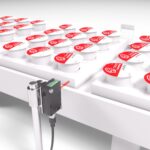
Ideal for use in material handling and conveying applications, the BOS 23K photoelectric block sensor provides a great combination of high accuracy and long sensing range at a reasonable price. In a typical application for example, two BOS 23K diffuse sensors with background suppression are able to monitor different colored totes as they travel from one production station to another without false triggering on the background.
SMARTEYE® ColorWise™ Sensor from TRI-TRONICS
February 3, 2010 by admin
Filed under Image, Photoelectric
TAMPA, FL: TRI-TRONICS COMPANY, INC. has introduced the first “True Color Sensor” designed to perform as well as an instrument or a spectrometer. The new SMARTEYE® ColorWise™ Sensor will solve the most difficult color applications at higher speeds than color cameras or other sensors; ideal for intricate color sorting or inspection problems found in today’s high speed packaging and production lines.

A unique 4 Channel Monitor provides users with a continual visual confirmation of performance. With a choice in speed versus resolution, the performance of the sensor is controlled by the operator… providing a wider range of application solutions.
FEATURES AND BENEFITS
*Low cost color solution vs. cameras, other sensors or spectrometers
*Solves difficult shade-to-shade or color-to color applications
*Selectable outputs, timers, resolution, speed, etc. to fit any/all applications
*4-Channel Monitor for at-a-glance performance feedback
*4 Digital Outputs and 3 Analog Outputs
*Selectable Speed versus Resolution
*Selectable Color versus Color + Intensity
*Captures color from HMI, PLC or remote button
TRI-TRONICS COMPANY, INC.
www.ttco.com
Photoelectric Sensors Deliver Printed Circuit Board Detection
October 26, 2009 by admin
Filed under Photoelectric
Available with 30 or 50 mm detection ranges, ML8 PCB sensors provide consistent, reliable printed circuit board detection regardless of holes, indentations and components on the circuit board, while delivering more precise detection of board edges by virtue of customized light beam patterns. These sensors come with factory-optimized settings that eliminate the need for sensitivity adjustments for true plug-and-play set-up, while eliminating erroneous and unauthorized sensitivity adjustments.Single Photon Detector
October 21, 2009 by admin
Filed under Featured, Photoelectric
The SQLightSensor is an ultra low noise near infrared Single Photon Detector based on a Geiger-mode InGaAs avalanche photodiode and an internal thermoelectrically cooler.
The SQLightSensor includes a Geiger-mode InGaAs avalanche photodiode (APD) and a thermoelectrically cooler (TEC) that ensures high detection efficiency up to 25%, low dark count (5.10-6 per ns gate), high speed trigger up to 10 MHz, and low jitter. The gate width and the delay are adjustable.
In addition the SQLightSensor provides plug-and-play Personal Computer connections via the USB interface which enable to easily adjust the detection efficiency, and tune the gate width and delay.
The SmartQuantum’s Single Photon Detector SQLightSensor is ideal for the most demanding scientific, defense and industrial applications, such as single photon counting, spectroscopy, microscopy, fluorescence, eye-safe laser range finder and LIDAR, and quantum cryptography.
Photonics@smartquantum.com
SmartQuantum Inc
www.smartquantum.com
Photoelectric Sensors From Rockwell Automation
September 14, 2009 by admin
Filed under Photoelectric
Rockwell Automation has released two new ranges of light array photoelectric sensors – the Allen-Bradley 45DLA discrete light array sensors and 45MLA measuring light array sensors.
Both ranges utilise optical synchronisation, and boast one of the smallest profiles on the market, making them ideal for a wide variety of applications, claims Rockwell Automation.
According to the company’s component area manager, Irma Napolitano, light array sensors represent a growing area for the company.
“The 45DLA and 45MLA sensor families will extend the scope of the company’s capabilities and complement our existing solutions,” she said.
“Furthermore, they will reinforce to the end-user that Rockwell Automation is a ‘one-stop shop’ for sensing requirements.”
The 45DLA is a discrete on-off light array sensor with 30mm resolution and integrated controller. Comprising five models—with sensing heights varying from 118 to 734mm and a sensing range of up to 8m—these sensors are designed for applications where products of different sizes, positions or orientation need to be detected.
Optical Forked Photoelectric Sensors
July 29, 2009 by admin
Filed under Photoelectric
The new GS 61 and GS 63 optical forked photoelectric sensors complement the successful GSU 14B and IGSU 14B ultrasonic forked sensors to create an outstanding performance portfolio. They are specially designed for the detection of non-transparent labels and, with their three millimeter wide fork widths, can be used for a wide range of applications, including the processing of booklets or folded labels. The extremely flat lower fork in slim-line design enables simple installation directly at the dispensing edge and in installation situations with very limited space. The GS 61, the world’s smallest forked photoelectric sensor for label technology in industrial quality, offers maximum installation freedom. With very visible markings, both devices enable fast alignment of the label tape. The connection options are also designed for installation conditions with limited space and for direct mounting. As an alternative to connection via cable, devices are also available with an M8 connector with either a horizontal or vertical outlet.

The sensitivity adjustment of the GS 61 is performed via the teach-in function or simply via a multiturn potentiometer without the need for a tool. The operating head provided for this purpose can be removed to prevent manipulation. On the GS 63, the teach button can easily be locked via the teach input for the same reason.
Unlike the plastic housing of the GS 61, the GS 63 has a metal housing that is sealed to protect against corrosion by means of the cathodic dip painting method familiar from automotive engineering. With regard to technology, the GS 63 is characterized by a particularly high switching frequency and short response time, guaranteeing very good repeatability. The new ALC (auto level control) also contributes to an improvement in functional reliability. This enables the sensor to automatically correct the switching threshold during operation so that the maximum function reserve is always available, e.g. in the case of material differences between labels that are actually of the same type. A feature already familiar from the IGSU 14B and integrated in the new device version is a warning output. Thanks to a self-test in the device, errors that occur during teaching and during operation, such as soiling or a changed signal threshold, are displayed.
Leuze electronic
www.leuze.com
OG Series Photoelectric Sensors from ifm efector
July 29, 2009 by admin
Filed under Featured, Photoelectric
EXTON, PA – ifm efector inc. introduces the new OG Series photoelectric sensors for washdown applications. The industry standard 18 mm diameter housings are 316 stainless steel and designed for food and beverage applications.

The OG’s zero-leak design prevents ingress during high pressure cleaning and steam cleaning. The Ecolab-certified sensors are chemically compatible with industrial caustic and acid solutions and are resistant to chemicals used in washdown environments.
The sensors are fitted with a plastic lens – rather than a traditional glass lens – that eliminates the possibility of glass splintering in food and beverage processes. The OG sensors feature a visible red light source that simplifies installation and maintenance. For application versatility, ifm offers high grade stainless steel mounting accessories for quick mounting.
The Micro DC units are available in a variety of models including diffuse reflective with background suppression, retro-reflective, and thru-beam pairs. Each model offers a light-on or dark-on outputs option.
ifm efector inc.
www.ifm.com/us
Background Evaluation Sensors from Pepperl+Fuchs
July 16, 2009 by admin
Filed under Photoelectric
TWINSBURG, OH – Pepperl+Fuchs Dura-Vue™ MLV12 Series Photoelectric Sensors are now available in diffuse mode with background evaluation. Dura-Vue background evaluation sensors provide a sensing range from 50 mm to 150 mm, with a 4 mm light spot that enables these sensors to detect even the smallest targets. They are engineered to detect all targets regardless of color or shape, making them well suited for use in material handling and packaging applications.

Dura-Vue™ series sensors feature a harsh-duty IP67 rated metal-framed housing with swivel connector, and deliver reliable operation in temperatures as low as -40°F. Users will also benefit from highly visible front and rear LED status indicators, cross-talk protection and high immunity to ambient light.
With Pepperl+Fuchs patented 4-in-1™ outputs, stocking and installation is significantly simplified because the sensor automatically sinks or sources its current based on the connected load. Alignment is easy with the aid of a visible red light source, while a potentiometer facilitates quick adjustments to the sensing range, as needed.
Background evaluation photoelectric sensors work by establishing a light path to a reference background object and back to the sensor. Targets are detected when they pass in front of the sensor and disrupt the light path. Even rounded or curved targets that otherwise may reflect light away from the sensor, and targets with poor reflectivity, are reliability detected.
Pepperl+Fuchs
www.pepperl-fuchs.com
Non-Contact Photoelectric Level Sensors
June 26, 2009 by admin
Filed under Level, Photoelectric
Southington, Conn. – For a range of liquid level detection applications in laboratory automation, medical devices, pharmaceutical packaging, beverage processing and other industries, Baumer has introduced the FFDK 16 Photoelectric Level Sensors, compact sensors designed to be mounted onto transparent or half-transparent standpipes from 3 to 13 mm in diameter.

These easy to mount, non-contact sensors feature integrated electronics and require no adjustments to be made post-installation for accurate detection of fluid presence. A dark/light switch allows the user to select the appropriate setting for their specific application. These rugged sensors are made with PFI for chemical resistance.
Foam can cause measurement errors in standard optical level sensors. To prevent this problem, the optical version of the FFDK 16 sensor features fibers that are arranged in rows, which allow the sensor to suppress foam and air bubbles up to 3 mm in size.
Baumer
www.baumerelectric.com/usa
SICK’s W15 Photoelectric Sensors
June 24, 2009 by admin
Filed under Photoelectric
Minneapolis, MN – SICK announces the launch of its W15 Photoelectric Sensors. These high-performance sensors use SICK’s third generation custom ASIC (application-specific integrated circuit) chip that incorporates OES3 technology to provide exceptional background suppression at an extended range. OES3 technology enables the W15 to ignore stray background reflections, detect multi-colored/shiny objects without false trips, and provide high immunity to ambient light.

The W15 provides flush mounting that reduces setup time and prevents the disruption of product flow. All W15s are assembled in the U.S. so customization options, such as cable cut to length, cable wrap with customer-specific part number, special connectivity, sensor pre-mounted to a bracket, kitted together with bracket and reflector, can help reduce material and labor costs. The W15’s advanced background suppression technology makes it ideal for a variety of applications in the packaging, material handling, and food and beverage markets.
SICK
www.sickusa.com