Wondering what’s new in sensor technologies? Sensor Tips provides you with the most up to date industry news and information about sensor technologies and more. Browse the articles below and get your news today!
MicroStrain, Inc. Awarded US Army SBIR Phase I Contract
November 5, 2009 by admin
Filed under Industry News, Wireless
Williston, VT – The US Army recently awarded MicroStrain, Inc. a Phase I SBIR contract to develop an active radio frequency identification embedded usage tracking system for helicopter rotating components.

The objective of the SBIR is to develop a comprehensive and networked health management capability that can be embedded directly into rotorcraft components. The project will support the development and demonstration of tiny, wireless energy harvesting radio frequency identification (EH-RFID™) nodes that provide part identification, performance monitoring, on-board storage of component usage history, and remaining useful life.
Energy harvesting combined with advanced wireless sensors represents a breakthrough technology that enables truly autonomous monitoring, reporting, and alerting. The new EH-RFID™ nodes to be developed under this Army SBIR will be compatible with MicroStrain’s new wireless sensor data aggregators (WSDA™), which synch wireless sensor networks and provide a remote portal to a secure server. WSDA™ devices feature an open architecture interface for integration with existing health and usage monitoring systems (HUMS), and stand-alone operation modes for data collection on aircraft without HUMS. WSDAs™ can also be programmed to send e-mail and SMS text message alerts if a potentially damaging event is detected.
“One of the unique aspects of this Phase I SBIR is that the EH-RFID™ sensor nodes consume very little energy, facilitating continuous operation using highly miniaturized energy harvesters. Our wireless, battery free RFIDs will break down the barriers to deploying widely distributed wireless sensor networks. Once embedded, these tiny sensors will reduce maintenance costs, increase mission readiness, and enhance safety”, said Steve Arms, President of MicroStrain.
MicroStrain
www.microstrain.com
American Sensor Technologies Among Top 500
October 26, 2009 by admin
Filed under Industry News
American Sensor Technologies, Inc. (AST) announced that it ranks number 405 on Technology Fast 500™, Deloitte LLP’s ranking of 500 of the fastest growing technology, media, telecommunications, life sciences and clean technology companies in North America. Rankings are based on percentage of fiscal year revenue growth during the five year period from 2004–2008. American Sensor Technologies, Inc. grew 288% percent during this period.
AST’s CEO, Richard Tasker, credits advanced technology and the contributions of all of their employees with the company’s 288% revenue growth over the past five years. AST is one of 28 Scientific/Technical Instrumentation companies on the list, representing 5.6% of the 500, one of 32 companies in New Jersey, 6.4%, and one of 4 Scientific/Technical Instrumentation companies in New Jersey, 0.8%.”
AST previously received the award for Technology Fast 500™ in 2004, 2005, and 2006. Overall, Technology Fast 500™ award winners for 2009 had growth rates ranging from 212 to 146,050 percent over five years, with an average growth rate of 2,486 percent.
Technology Fast 500™ Selection and Qualifying Criteria
Technology Fast 500™ provides a ranking of the fastest growing technology, media, telecommunications, life sciences and clean technology companies in North America. This ranking is compiled from nominations submitted directly to the Technology Fast 500™ website, and public company database research conducted by Deloitte. Technology Fast 500™ award winners for 2009 are selected based on percentage fiscal year revenue growth during the five year period from 2004 to 2008.
About American Sensor Technologies, Inc.
American Sensor Technologies, Inc. (AST) manufactures MEMS-based pressure sensors, pressure transducers and pressure transmitters that offer the best price-performance ratio in the industry. Manufactured in New Jersey, AST pressure sensing products are built with a full selection of hazardous area and industrial approvals to service customer applications. Common industries utilizing AST sensor products are industrial OEM hydraulic systems, fuel cells, medical gases, HVAC, refrigeration (ammonia, Freon, CO2), Oil & Gas exploration and production, and off-road vehicles. AST’s exclusive, proprietary Krystal Bond™ Technology (an advanced process in which inorganic materials are molecularly diffused onto a metallic surface in the presence of certain gases), produces high-performance pressure sensing products through the use of a single piece of stainless steel. AST offers a variety of UL and CSA approvals for Explosion-proof, Intrinsically Safe, and Non-incendive pressure transmitter applications.
About Deloitte
“Deloitte” is the brand under which tens of thousands of dedicated professionals in independent firms throughout the world collaborate to provide audit, consulting, financial advisory, risk management, and tax services to selected clients. These firms are members of Deloitte Touche Tohmatsu (DTT), a Swiss Verein. Each member firm provides services in a particular geographic area and is subject to the laws and professional regulations of the particular country or countries in which it operates. DTT helps coordinate the activities of the member firms but does not itself provide services to clients. DTT and the member firms are separate and distinct legal entities, which cannot obligate the other entities. DTT and each DTT member firm are only liable for their own acts or omissions, and not those of each other. Each of the member firms operates under the names “Deloitte,” “Deloitte & Touche,” “Deloitte Touche Tohmatsu,” or other related names. Each DTT member firm is structured differently in accordance with national laws, regulations, customary practice, and other factors, and may secure the provision of professional services in their territories through subsidiaries, affiliates and/or other entities.
Meters Perform Sophisticated Calculations
October 8, 2009 by admin
Filed under Featured, Industry News
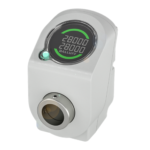
The new PAXDR Dual Rate Meter from Red Lion provides real-time viewing of dual input rates, paired with sophisticated math functions to measure and display the sum, difference, ratio, draw or percentage of total between the two rates. PAXDR is a 5-digit dual rate indicator and 6-digit dual totalizer that monitors mission-critical factors such as inflow and outflow, unwind and rewind wire tension, feed and tension roll speed, and other pivotal production rates.
Within its industry-standard 1/8 DIN housing, PAXDR simplifies dual rate applications as a single, easy-to-use device—without the need for any complex programming that would otherwise be required to perform application-specific calculations. Six values are viewable on the meter’s .56″ LED display: one each for rates A and B, totalizers for A and B, and the rate and totalizer for calculation C. These readings improve production quality and reduce rejects by ensuring a parameter such as feed rate, line speed, flow rate or tension is properly maintained throughout processing.
Users can simply select the desired scale for each of the two signal inputs using PAXDR’s programmable function keys, with independent scaling provided for A and B totalizers. This capability makes PAXDR ideal for applications such as flow measurement, where both flow rate and volume must be monitored and scaled to a common unit of measure. Plus, 10-point scaling for both input rates is provided for challenging non-linear processes.
“Monitoring and comparing two rates at once is often critical in flow, web or extruding applications,” said Jeff Thornton, Red Lion product manager. “If the many points of a continuous process are not kept harmonized, the ramifications can be disastrous.” Thornton adds, “PAXDR eliminates these risks by displaying both individual and total rates for each of the two designated inputs, as well as delivering a rate and totalizer calculation based upon the user’s application parameters.”
Sensing Solutions Lead to Recognition
September 29, 2009 by admin
Filed under Industry News
Boulder, CO - Phase IV Engineering, Inc. announces that it has been chosen by CSIA as one of the most innovative technology companies in Colorado and will showcase its cutting edge innovations during the Colorado Technology Association’s (CSIA) DEMOgala on October 8, 2009, at the Colorado Convention Center in Denver.
Phase IV Engineering developed a sophisticated Passive RFID Sensing ASIC (application specific integrated circuit) called the “SensIC” and, during the DEMOgala Showcase, will demonstrate its adapted use in a number of applications ranging from aerospace, agriculture and food processing. This tiny chip offers battery-less sensing and can wirelessly measure and communicate the ID, temperature, and the value of an external MEMS sensor, such as pressure, shock, strain gauge, humidity, and more.
The theme of this year’s DEMOgala is “The Crossroads of Technology, Innovation & Growth”. The DEMOgala day long event features over 100 speakers on 15 different panels discussing the newest trends in technology. Topics include everything from cloud computing, software development, crowdsourcing, mobile applications, web commerce, open source, social networking, APIs, transparency, and much more.
Sensor Detects Lung Cancer?
September 14, 2009 by admin
Filed under Industry News
Lung cancer is a brutal disease, often not caught until it’s too late for treatment to do much good. Now researchers are building an electronic nose that could help physicians detect the disease during its initial stages. Using gold nanoparticles, scientists at the Israel Institute of Technology in Haifa have created sensors with an unprecedented sensitivity for sniffing out compounds present in the breath of lung-cancer patients.
Other attempts to do this have yielded promising results (see Lung-Cancer Breathalyzer and Cancer Breathalyzer), but those devices require a higher concentration of the telltale biomarker chemicals than the Israeli device. The chemicals, called volatile organic compounds (VOCs), are metabolic products present in the vapors that we breathe out, but they occur in such small amounts that researchers have had to find ways to increase their concentrations before testing. Now, Hossam Haick and his colleagues have built sensors using an array of gold nanoparticles that can detect these VOCs in their natural concentrations and under the humid conditions characteristic of human breath. Their research was recently published online in the journal Nature Nanotechnology.
Other devices used for the same kinds of tests depend on expensive means of VOC detection, such as optical sensors, mass spectrometry, and acoustic sensors. These systems aren’t always portable, either. Gold-nanoparticle sensors, however, have the potential to be small and inexpensive–the only problem has been getting the VOCs to stick to the gold. “It was quite a lot of work to get them to stick,” says Haick, a 2008 TR35 winner. “We’re the first to do so, as far as I know.” Because of an impending patent, Haick declined to explain how he achieved the desired stickiness.
Iris Recognition Sensor Gets a Speed Boost
September 11, 2009 by admin
Filed under Featured, Industry News, Vision
Smart Sensors Limited, a spin-out from the University of Bath, UK, has
introduced version 2 of its MIRLIN software toolkit, enabling security system
developers to create iris recognition systems capable of 2 million matches per
second, four times faster than other current technologies. Functions include
image acquisition, enrollment, and verification or determination of identity
(ID) from human irises.
Analyzing a digital image of the iris using techniques similar to those employed
in video encoding, the Smart Sensors patented solution requires less processing
power than alternative methods and the software code can operate in only around
300 Kilobytes of memory on a silicon chip. As a result, systems can be based on
small, low-cost microcontrollers with less processing power than an ordinary
personal computer. This makes the technology suitable for use in fixed or
battery-operated, handheld equipment.
Smart Sensors` MIRLIN software development kits (SDK) enable systems to be
optimized for the best combination of speed and accuracy. Images can be scanned
in segments from 18 degrees to 0.72 degrees wide, depending on the accuracy
required. The technology works with iris characteristics that generally conform
to ISO/IEC standards but it is capable of delivering accurate results with
images that are significantly poorer than those defined by the standard.
The SDK can work with a variety of image sources, including several
manufacturers` iris cameras. Versions are available to support various
processors and operating systems. To make licensing more attractive for
customers, the company only charges a fee for each product or each server on a
network, not for every user or enrollment. Customers are supported through
service level agreements that provide bug fixes and product enhancements.
Smart Sensors, which is based in the SETsquared business incubator at the
University of Bath, has recently been awarded the Frost & Sullivan “Global Iris
Biometric Systems Technology Innovation of the Year Award” for 2009.
IBM Intellegence in sensor data
August 19, 2009 by admin
Filed under Industry News
IBM has introduced software that extracts data from sensor devices found in supply chains and other applications, and then sends the information for processing in business systems.
The WebSphere Sensor Events software can draw data from readers of radio-frequency identification tags on items moving between suppliers, manufacturers and distribution centers. The tags typically contain tracking and authentication data.
In addition, the WebSphere software can be used with s
enors found in other applications, such as monitoring and managing water flow rates, highway traffic, seismic activity, air quality and the flow of energy across power grids.
In capturing data, the IBM technology automates a reaction by a business system based on a set of rules or events established by the customer. “The software is unique in that it spans the entire spectrum of clients’ solution requirements, from capturing information from sensing devices to connecting with systems for analytics, business process management and managing information technology and physical assets,” IBM said in a statement.
WebSphere Sensor Events includes business event processing technology obtained by IBM in the 2008 acquisition of AptSoft. The technology has been integrated with business process management and events management capabilities from WebSphere and Tivoli software.
Data extracted from sensors can be processed through IBM’s Smart Analytics System, which is the company’s combined hardware and software for an analytics-ready data warehouse geared toward business-problem-specific applications. In addition,WebSphere Sensor Events can be used with IBM’s Cognos business intelligence software.
Customers of IBM’s latest product include Volkswagen, which is using the technology in accessing information on the exact location of the shipping containers used to transport parts from suppliers to the manufacturing floor, IBM said. Other customers includeNortura , Norway’s largest meat and egg producer. The company is using the IBM software to track meat from farm to processing plants, and then to distribution centers and stores.
MicroStrain Receives Third Frost & Sullivan Award
May 6, 2009 by admin
Filed under Inclinometer, Industry News, Wireless
Williston, VT – Frost & Sullivan has awarded MicroStrain® the 2009 North American Business Development Strategy Leadership of the Year Award in the sensors market in recognition of the company’s ability to grow at 40 percent per year over the last five years.

The Award recognizes the company’s ability to perceive consumer needs, develop products and services that meet consumer needs, successfully introduce products or services to the industry, and identify new market segments to expand the existing customer base. Through a combination of vision, technology, and successful marketing, the Award recipient has demonstrated superior market growth skills.
“MicroStrain attributes its success to its customers, its drive to understand customers’ needs and to innovative employees who translate these needs into products,” said Steve Arms, President of MicroStrain. The company has won nine “Best of Sensors Expo” Gold awards and two previous Frost & Sullivan awards for innovation.
MicroStrain has consistently secured government funding to develop state-of-the-art technology and has quickly transitioned these innovations into their standard products.
Frost & Sullivan’s independent report FY2009 concluded with the following:
“MicroStrain’s success in its business development strategy is illustrated by its new 19,000 square foot facility with state-of-the-art technology for its employees, to support its growing customer base, increasing demand, rapid growth and research and development. Research indicates that MicroStrain’s strategy has been and will always be to work with its customers to introduce the latest in advancd sensing technology. For its ability to execute an innovative business development strategy within the existing competitive landscape empowering the company to grow despite the current economic turmoil, to base product innovations and growth strategy exclusively on customer needs, Frost & Sullivan is once again proud to present the 2009 North American Business Development Strategy Leadership of the Year Award to MicroStrain in the sensors market,” stated Frost & Sullivan’s industry analyst, V. Sankaranarayanan.
The Frost & Sullivan Award for Business Development Strategy Leadership is presented each year to the company that has demonstrated excellence in business development within the industry. Analysts at Frost & Sullivan monitor major participants in industry and conduct interviews with the companies, customers and suppliers, and carry out extensive technology and secondary research to determine which company should receive the award.
MicroStrain
www.microstrain.com
TURCK’s Terminal Chamber for uprox®+ Sensors
April 20, 2009 by Editor
Filed under Industry News
Comments Off
Minneapolis, Minn. – TURCK introduces an integrated terminal chamber for its line of uprox®+ sensors that conforms to FDA requirements for washdown environments, including food and beverage industry applications such as dairies, breweries and bakeries. This terminal chamber includes removable terminals for quick and easy mounting using screws or cage clamps. Furthermore, by simply rotating the cover by 180 degrees, the user can select either a straight or 90-degree cable exit.
TURCK’s uprox+ line of factor 1 sensors detects all metals at the same rated distance and meets the requirements for food-safe materials. The sensors are available in 12, 18 and 30 mm stainless steel barrels with a liquid crystal polymer (LCP) front cap that is impermeable to cleaning agents, disinfectants, high pressure and steam cleaning.
EtherCAT Sensors Can Receive Power Over Standard Cat 5 Cables
March 12, 2009 by R. Nelson Parrish
Filed under Industry News
The EK1132 Power over EtherCAT junction terminal enables EtherCAT® sensors to receive power over a standard Cat 5 cable. Ultra high speed EtherCAT sensors that deliver low microsecond (µs) level communication can now be more easily installed in industrial applications. Based on the IEEE standard 802.3af, the EK1132 requires only a standard EtherCAT/Ethernet cable for the fieldbus signal and the power supply.

The EK1132 EtherCAT junction suits shaft encoders or length measuring devices that can now be connected by a single cable. The sensor supply voltage of 48 V is generated in the EK1132 junction from the 24 V used as the industry standard. The maximum current input of the terminal devices is 350 mA. The signal and energy transfer takes place on the same wire so four-wire cables can be used. The sensors are connected to Power over EtherCAT via a 4-pin connector such as M12. The maximum possible Ethernet cable length is 100 m.
An intelligent power distribution system detects which power consumer belongs to which performance class and distributes the total available power (15.4 W) to the connected devices accordingly.
Beckhoff Automation
www.beckhoffautomation.com