
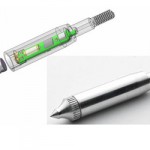
When new products are introduced, manufacturers like to identify other potential applications beyond the one used to drive product development. Mounting an accelerometer on an arrow tip to provide ballistic measurements to evaluate bows probably was not on any accelerometer manufacturer’s list. However, that is what Full Flight Technology does to improve high-performance archery. Using […]
MEMS
Silicon MEMS Gyro Takes on Fiber Optic Gyros
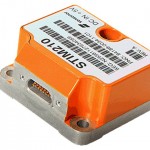
Mechanical gyroscopes use a top-like mechanism spinning at high speed to detect angular position and provide high precision but at a high price. In contrast, fiber optic gyros (FOG) have minimal moving parts and offer high precision as well with a medium to high-end pricing. Sensonor Technologies’ STIM210 gyro module targets both designs with low […]
Small Vibration Monitor Delivers Exceptional Low-noise Performance

A vibration monitor can prevent a myriad of problems – if it can fit within the monitored system’s space constraints and has the right performance. For noise sensitive applications with limited space, Analog Devices’ ADIS16228 iSensor vibration monitor could be that solution. An embedded programmable processor in the MEMS-based vibration analysis system provides directional sensing […]
A Gyroscope Design for Automotive Electronic Stability Control Systems
Three-Axis Digital Gyroscope Targets Consumer and Portable Applications

Today’s advancements in Micro-Electro-Mechanical Systems (MEMS) sensor technology can mean new levels of performance and reliability in specific applications. An example is STMicroelectronics newest 3-axis digital gyroscope that provides high sensing resolution with high immunity to audio noise and vibrations. Housed in a 4x4x1 mm package, the L3GD20 is immune to both mechanical vibrations coupled […]
New Conference Addresses Smart Sensors Technology Industry

The inaugural SENSORS Tech Forum will be held October 10-12, 2011 at the Sheraton Hotel, Boston Massachusetts. Focusing on sensors and sensor-based systems, the conference targets Product and System Design Engineers providing 32 conference sessions with four separate tracks: Aerospace, Defense and Harsh Environment; Optics and Imaging; Smart Sensors; and Wireless Technology/Sensor Networking and Integration. […]
Sensor Market Grows with Consumer and Automotive Demands

Market research firm Databeans forecasts the sensors and MEMs market to reach $19.1 billion by 2016 with a 10% compound annual growth rate. Driven by strong growth trends in consumer and automotive applications, the consumer segment is forecasted to increase to $853 million by the end of 2012 and automotive to $203 million. Different forces […]
A Single-Chip Passive IR Temperature Sensor
Analog Devices Offers Trio of New Gyros
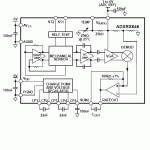
Three new gyroscopes from Analog Devices, Inc. provide new design options. Using differential quad-sensor technology to reject the influence of linear acceleration and vibration, the MEMS gyros have exceptionally accurate and reliable rate sensing even in severe shock and vibration ambients. Rated at ±250°/s, the ADXRS642 brings improved vibration and shock immunity performance to existing […]
Monitoring the Quality and Blending Accuracy of Fuels
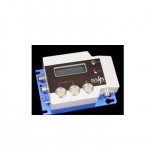
If you can measure fuel density what else can you do? One thing is make a fuel density meter. That’s exactly what Integrated Sensing Systems, Inc. (ISSYS) has done. Using its microelectromechanical system (MEMS) technology, ISSYS FuelSense meter can measure the different densities of ethanol, biodiesel and gasoline and monitor their purity and mixing ratio. […]
