
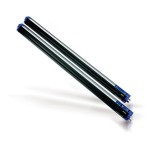
For automatic material handling applications that range in height or dimensional measurement from 15 to 250 cm, Automation Systems Interconnect, Inc. DS2 series of area sensors may provide the answer. The sensors have 5m operating distances for 6 mm resolution versions and 10m for 25 mm resolution versions. Measurement configuration can be manually set with […]
Proximity
Eco-Friendly Sensors: Good for the Environment and Applications
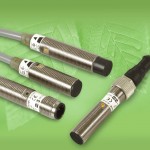
Recycled corn by-product – it’s not the first design aspect I look for in a sensor. However, Carlo Gavazzi’s engineers used a potting material made of a recycled corn by-product to obtain higher resistance to mechanical stress and increase the reliability, improve the stability and provide a longer sensor lifetime for its ICB Series inductive […]
Limited Space? Not a Problem for Short Proximity Sensor
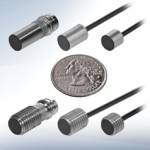
With its 6-mm package, Balluff claims to deliver the shortest self-contained inductive proximity sensors in the world. The fully integrated SuperShorty sensors do not require additional amplification and include reverse polarity and short circuit protection. The sensors have a 1.5 mm sensing range with PNP and NPN and normally open and normally closed versions. Three […]
Motion Sensing Demoed in Visteon Concept Vehicle

The center console (dashboard) could change dramatically in future vehicles with controls located closer to driver. This frees up space for other options. Visteon demonstrates one possibility using motion sensing to Sensor Tips senior editor Randy Frank at CES 2011. To view the video, click here. To find out more about instrument panel technologies from […]
IR Sensing Used in Instrument Panel Concept
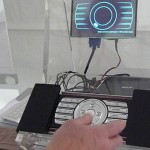
At the 2011 International CES in Las Vegas, an expert in Visteon’s tent demonstrates infrared (IR) technology to sense where a driver points in a concept instrument panel to Sensor Tips senior editor Randy Frank. Occupant interface technology using IR sensing tracks the finger and has advantages over a capacitive proximity sensing. To see the […]
RFID Sensing Accesses Door Lock

Touch sensing was demonstrated as an alternative to commonly used magnetic key sensing for authorizing access to a locked door in a previous Sensor Tips video. At the Hospitality Design Expo, at the Sands Convention Center in Las Vegas, May 19-21, Jon Nevison demonstrates another option using RFID technology for authorizing access. The implication from […]
Proximity Sensor for Welding Applications
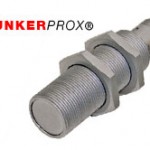
Rather than frequently replacing a sensor in an abusive welding environment, a new inductive proximity sensor can provide increased impact protection. Balluff’s BunkerProx M18 sensor has a thick housing for withstanding mechanical impact in welding applications. A frontal-impact deflection ring protects the face from repeated welding impacts. In addition, the sensor’s ceramic face resists weld spatter […]
