Applying SENSOFOIL Technology
June 14, 2011 by Randy Frank
Filed under Frank Talk, Position
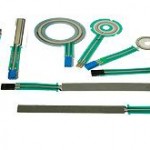
Jens Kautzor, sales director for Hoffmann + Krippner discusses two applications for the company’s SENSOFOIL membrane technology with Randy Frank at Sensors Expo 2011. SENSOFOIL membranes enable the design of ultra-flat and very accurate linear and rotary position sensors based on potentiometer technology.
For more information about Hoffmann + Krippner’s SENSOFOIL membranes, click here.
To watch the video, click here.
A Single-Chip Passive IR Temperature Sensor
June 10, 2011 by Randy Frank
Filed under Frank Talk, MEMS Sensor Technology, Temperature
3D Hall Sensor Targets Automotive Applications
June 6, 2011 by Randy Frank
Filed under Featured, Position
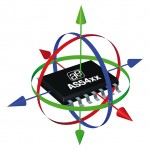
Motion control systems in vehicles require sensing that Hall sensors frequently provide. In some instances, sensing all three directions can improve and simplify the systems design. For these applications, austriamicrosystems introduced the AS5410 linear position sensor based on a 3D Hall platform. The sensor measures absolute position in automotive & industrial applications and provides a linearized output with up to 0.5 % accuracy.
The 3D Hall sensor’s output remains stable even when the device is subject to external stray magnetic fields. The result of a differential measurement technique, the company claims this capability as a worldwide first.
Sampling now, production quantities of the sensor will be available in Q3. Pricing for the AS5410 3D Hall sensor starts at $ 3.75 for 1000-piece quantities.
For more information on austriamicrosystems AS5410 and the AS540x series, click here.
MicroStrain Launches SensorCloud™
June 2, 2011 by admin
Filed under Industry News, What's Hot, Wireless
MicroStrain announces the release of SensorCloud™, a unique sensor data storage, visualization, and remote management platform that leverages powerful cloud computing technologies to provide excellent data scalability, rapid graphing, and user programmable online analytics. Originally designed to support long-term deployments of MicroStrain wireless sensors, SensorCloud now supports any web-connected third party device, sensor, or sensor network through a simple OpenData API.
Core SensorCloud™ features include:
- Data in the Cloud: Virtually unlimited data storage with triple-redundant reliability, ideal for collecting and preserving long-term sensor data streams
- OpenData API: Allows users to securely upload sensor data from any web-connected source or platform, and download selected or entire sets of data
- FastGraph: Time series visualization & graphing tool with exceptionally fast response allows viewers to navigate through massive amounts of data, and quickly zero in on points of interest
- Custom Alerts: Flexible SMS and email alert scripting features helps users to create meaningful and actionable alerts
- LiveConnect: Allows remote configuration, viewing, and record high speed data streams from any wireless sensor cluster on your Ethernet network in real-time
- MathEngine: Enables users to quickly develop and deploy data processing and analysis apps that live alongside their data in the cloud
According to Steve Arms, CEO of MicroStrain, “We have now expanded our offerings from sensors and sensor networks to information management and analysis, and have implemented SensorCloud™ to provide sensor information when, where and how our customers require it. This is truly ground-breaking technology and I am proud to lead such an innovative team of engineers who have thought outside of the box to make this a reality.”
Unlike previous web-based sensor data aggregation platforms, MicroStrain’s SensorCloud™ is unique in that it leverages several new cloud computing technologies to make it easier to work with extremely large data sets using a new high-performance web data visualization tool that typically generates plots in under a second, and allows users to quickly navigate through gigabyte, terabyte, and even petabyte sized data sets. In addition, SensorCloud™ is, to our knowledge, the first web-based sensor data aggregation platform that provides a flexible online analytics tool supporting user-developed apps. Users can either upload their code or use an online editor to develop a wide range of data processing apps, from simple one-time scripts for filtering and statistical analysis, to advanced, continuously-running online algorithms for health monitoring and prognostics.
MicroStrain
www.microstrain.com
Measure Relative Humidity and Temperature Without Wires
May 31, 2011 by Randy Frank
Filed under Chemical Sensor, Featured, Temperature
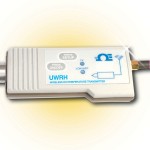
Wireless is the must-have attribute for many of today’s consumer and industrial products. When you get two for one, so much the better. With Omega’s UWRH-2 wireless relative humidity transmitter users get both relative humidity and temperature measurements. The battery-powered unit transmits these readings as well as signal strength and battery status back to a host receiver up to 120 m (400’) away.
The unit’s temperature range is -17 to 49°C (2 to 120°F) with an accuracy of ±1°C (±1.8°F). The relative humidity range is 2 to 98% RH with accuracy from ±2.5 to ±3.5 % max depending on the temperature range
For more information about Omega’s UWRH-2 wireless relative humidity transmitter, click here.
Eco-Friendly Sensors: Good for the Environment and Applications
April 8, 2011 by Randy Frank
Filed under Featured, Inductive, Position, Proximity
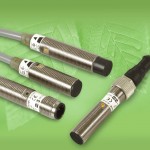
Recycled corn by-product – it’s not the first design aspect I look for in a sensor. However, Carlo Gavazzi’s engineers used a potting material made of a recycled corn by-product to obtain higher resistance to mechanical stress and increase the reliability, improve the stability and provide a longer sensor lifetime for its ICB Series inductive proximity sensors.
The Eco-Friendly Inductive Proximity Sensors have air-core sensing coils that replace traditional ferrites and coils. This design provides two application advantages. For one, it has a higher immunity to magnetic fields than traditional coils. Secondly, because the sensor has no ferrite coil that could crack, it can withstand higher vibration levels and impacts than older inductive proximity sensors.
Additional information on the ICB Series includes a brochure and data sheet.
Limited Space? Not a Problem for Short Proximity Sensor
April 6, 2011 by Randy Frank
Filed under Featured, Inductive, Position, Proximity
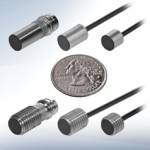
With its 6-mm package, Balluff claims to deliver the shortest self-contained inductive proximity sensors in the world. The fully integrated SuperShorty sensors do not require additional amplification and include reverse polarity and short circuit protection.
The sensors have a 1.5 mm sensing range with PNP and NPN and normally open and normally closed versions.
Three housing styles in metal, stainless steel and plastic, smooth or knurled plastic housings that can be press fit or glued into place and 90º cable add to sensor ability to mount in extremely small spaces.
For more information about Balluff’s SupertShorty proximity sensors, click here.
Diffuse Contrast Sensor Operates within 50 µs
March 9, 2011 by Randy Frank
Filed under Featured, Photoelectric
Print mark detection in high-speed packaging and printing operations requires a rapid response sensor. Baumer’s FKDK 14 diffuse contrast sensor uses a white LED to precisely detect print marks within a response time of 50 µs. With the white light source, the photoelectric sensor can reliably detect print marks of all colors, even with slight contrast to the background. A yellow LED visible through the sensor’s transparent housing base indicates the switching status.
The sensor’s 14.8 x 43 x 31-mm size allows easy integration into machines.
For more information about Baumer’s FKDK 14, click here.
Sensing Print Mark Detection
March 7, 2011 by Randy Frank
Filed under Featured, Photoelectric
TRI-TRONICS MARK•EYE PRO sensor has a 45-µs response time and high immunity to ambient light. Using the broadband characteristics of a white light LED, the sensor achieves high-resolution for detecting the greatest variety of color combinations on any color background.
With the sensor’s “One-Touch” AUTOSET, setup simply involves putting the background in view, pressing the black button if the background is darker than the registration mark or pressing the white button if the background is lighter than the registration mark.
Units are available with lens and fiberoptic light guide options as well as 6-ft cable or connector options.
For more information on TRI-TRONICS MARK-EYE Pro, click here.
Balluff’s Linear Position Transducer Fits Into Small Spaces and Small Budgets
August 19, 2010 by Randy Frank
Filed under Featured, Position
Designed to fit into small spaces, Balluff’s Micropulse PF-series linear transducer has a profile of less than 1-inch high. The low profile design targets plastic injection and blow molding; woodworking and metalforming; material handling and more.
Using magnetostrictive sensing technology, the unit has a measurable range of 51 to 4572 mm (2 to 180 in) and a scalable, absolute, analog output (0 to 10V, 4 to 20 mA, 0.1 to 20 mA or -10 to 10V). The non-linearity for a stroke length of less than 500 mm is ±200 µm and for a stroke length greater than 500 mm, it is ±0.04% of full stroke. Based on the use of time-tested, field-proven technology, the company claims the units sell for an “economical price.”
For more information about Balluff’s Micropulse Perfect Fit linear position transducer, click here.