
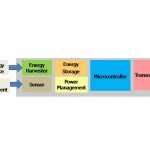
If you are interested in the possibility of using energy harvesting technology to power a wireless sensor network, there are few tools that you should consider to determine if this can make a difference in your next system design. The 308-page book, Energy Harvesting for Autonomous Systems written by Stephen Beeby and Neil White of […]
Vibration
Accelerometer Designed for Continuous Operation to +482°C (+900°F)

At 482°C, Meggitt Sensing Systems Endevco model 6233C is rated considerably higher than the recently announced 6222S model that had a maximum 260°C operating environment. Available standard ranges of 10, 50 and 100 pC/g, the model 6233C offers a differential output with excellent performance stability over temperature and a wide operational bandwidth. The case isolated […]
Accelerometer Operates in Continuous 260°C Environment
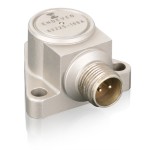
Designed for monitoring vibration in gas turbines, Meggitt Sensing Systems Endevco Model 6222S accelerometer is a piezoelectric design with sensitivities of either 20, 50 or 100 pC/g. The sensor’s piezoelectric technology does not require an external power supply. The unit’s balance differential output allows its use with any industry differential charge amplifier. The sensor’s packaging is […]
4-20 mA Transmitter Targets Accelerometer to Vibration Signal Conversion
Another recently introduced signal conditioning circuit for 4-20 mA output, specifically for vibration signals, comes from IMI Sensors – a division of PCB Piezotronics, Inc. Operating from loop-power supplied by a PLC, DCS or SCADA system, the stainless steel housed 682A09 converts the 100 mV/g output from an accelerometer to a 4-20 mA vibration monitoring […]
Energy Harvesting for Enthusiasts
Anyone who likes the idea of something for nothing has to be interested in energy harvesting, getting the energy to avoid reliance on traditional energy sources such as batteries, for free – once the initial hardware investment has been made. Today, in addition to solar, wind and falling or flowing water, vibration, RF, heat and […]
