

The true value of a smart sensor comes from its ability to analyze, interpret, and convert the acquired data into usable information. This can be achieved by the sensor itself or its use in a sensing node. Additional attributes with high value that can offset increased cost include self-calibration, fault-detection, higher reliability and reduced maintenance […]
Featured
How have smart sensors changed within the last few years? Pt 1

When the IEEE and the National Institute for Standards and Technology (NIST) first addressed the need for a smart sensor standard in 1993, today’s dominant application for sensors – the smart phone – did not exist. At that time, automobiles were already successfully using a variety of sensors to meet government legislation for emissions control […]
Select and integrate sensors into IoT devices
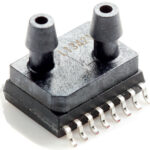
Get an understanding of how to select sensors and microcontrollers for your IoT product, with an emphasis on circuit design to optimize performance.
How does AI use sensors for object recognition? Pt 2

In addition to healthcare, another prominent use of object recognition has emerged as the capability to see further than ever before has increased dramatically. The James Webb Space Telescope’s (JWST’s) ability to see further also results in a considerable increase in astronomical images. Sifting through these images for new information about the beginnings of the […]
How can sensors prevent long term damage to homes/ structures?

In your home, sensors can detect hazardous and dangerous situations that directly and imminently impact the homeowner or other people in the home. These situations could include a fire that can damage the home and even endanger its inhabitants, hazardous chemicals, such as natural gas, that only affects human inhabitants, burglary that can impact both […]
How does AI use sensors for object recognition?

In addition to its use in facial recognition, artificial intelligence (AI) also plays a critical role in advancing object recognition. Perhaps one of key and leading-edge applications for AI is in image recognition and diagnostics in healthcare. According to a technology assessment report published by the U.S. Government Accountability Office (GAO) with content from the […]
How can sensors improve 5G system performance?

A variety of sensor technologies are being employed to improve the performance of 5G, or mmWave, communications. Sensors can help mmWave systems optimize transmit power to optimize device power consumption and operating range. They can be used to monitor movements within a building environment. Motion sensors such as inertial measurement units (IMUs) can help identify […]
How will AI impact sensing?

While knowledge of and familiarity with ChatGPT (an artificial intelligence (AI) chatbot) are quite common, the specific impact of AI on sensors is not. With the increasing use of AI in products and systems, Raj Khattoi, Sr. Director of Sensor Systems and IoT at Infineon Technologies gave SensorTips some answers to specific questions. SensorTips: With […]
How do sensors play into AI’s facial recognition capabilities? Part 2
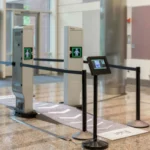
Beyond its ability to improve facial recognition for home security (discussed in Part 1), artificial intelligence (AI) is being applied in several other areas. TSA The Transportation Security Administration (TSA) uses two types of Credential Authentication Technology (CAT) to verify the identity of travelers. First-generation CAT units scan a traveler’s photo identification (ID) and confirm […]
How do sensors play into AI’s facial recognition capabilities? Part 1

Among the growing number of applications for artificial intelligence (AI) is advanced imaging capabilities for reliable facial recognition. Reliability is required for effective analysis by law enforcement agencies, access to commercial or industrial complexes, travel, or even a homeowner. While AI enables complex analysis and performs it in a remarkably short timeframe, effective analysis requires […]
