
Part 1 of this blog addressed current shunts and Hall-effect sensor designs. This part discusses current transformers and new technology options such as magnetoresistance and even diamond quantum sensors. One of the major issues in today’s electric vehicles (EVs) is the ongoing evolution of technology with the standards evolving as well. In the 100+ years […]
Current Sensor
How current sensing impacts electric vehicles: part 1
The need to transition from gasoline and diesel (fossil fuels) powered vehicles to electric vehicles (EVs) to reduce carbon dioxide levels has revealed many controversial issues. Common issues include implementation timing, required infrastructure (including fast charging multi-vehicle systems), legislated rather than consumer-based adoption, ongoing system enhancements, and sources of new critical raw materials. One of […]
Current sensors and current shunt monitors for common-mode voltages and temperatures

Texas Instruments debuted new current sensors to help engineers simplify their designs while improving accuracy. Designed for a broad range of common-mode voltages and temperatures, the new products include a lowest-drift isolated Hall-effect current sensor for high-voltage systems and a portfolio of current shunt monitors that eliminate the need for an external shunt resistor for […]
ON/OFF current sensor from Carlo Gavazzi
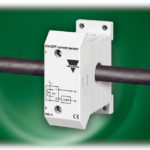
CARLO GAVAZZI has announced the addition of a compact ON/OFF current sensor, which is ideal for monitoring of critical loads such as fans, water pumps, lighting, and motors. The EISH Series can detect current as low as 200 mA AC and up to 60 Amps AC, making it optimal for applications in a variety of […]
4 to 20 mA current loops made easy

by Edward E. Herceg, VP and CTO, Alliance Sensors Group For analog sensor data transmission, a 4-20 mA current loop is a very common method to convey the sensor data acquired. Sensors or transducers are usually designed to measure a range of values of the measured parameter, which is known as the measurand. The measurand […]
Electronics that operate in extreme heat to 800°C
Extreme environments require electronic systems capable of surviving beyond the MIL-STD operating temperature range of -55°C to +125°C. This FAQ series will go to extremes and look at super hot electronics (up to 800°C) and cryogenic electronics. Part one of this series looks at electronics that operate in extreme heat. Part two will look at […]
Kelvin 4-Wire sensing solves the “IR Drop” problem
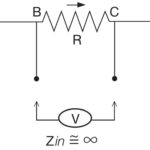
Novice engineers usually don’t learn about this problem and its solution in school, but “practicing” ones learn about it soon enough! Problem: I need to determine the change in resistance of a low-resistance sensor located many meters away. My plan was simply to apply a known voltage across the thin-wire sensor leads and measure the […]
3.3-V current sensor now available for ADC and microprocessor-based power systems

ACIENNA announced that their MCx1101 family of current sensors now supports 3.3-volt mΩ applications. These highly accurate, wide bandwidth AMR-based current sensors are now available for a wide range of ADC and microprocessor-based power systems and applications. The MCx1101 are fully integrated, bi-directional current sensors that offer much higher DC accuracy and dynamic range compared […]
What’s new in magnetic sensors?
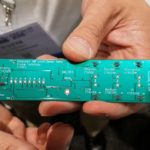
At Sensors Expo, Wayne Seto, Senior Director of Product Marketing from Crocus Technology, discusses the company’s tunnel magnetoresistance (TMR) magnetic sensing technology. For sensing, TMR is used in number of different applications. Wayne demonstrated several digital latches with omnipolar (CT832DM), bipolar (CT852AN), unipolar (CT832EK, CT832BV, CT832SK and CT811DK) and analog (CT834DR) magnetics. For omnipolar sensing […]
Bidirectional power-switching solution is one of the industry’s smallest
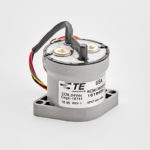
TE Connectivity has released an additional size for the KILOVAC current-sensing [KCS] high-voltage contactors. The KILOVAC KCS01 contactor is a compact power-switching solution with an integrated current sensor and current trip function. These contactors are suited for applications in harsh military and commercial electric vehicles, power distribution, energy storage and battery storage systems. For more […]
