RFID Links the Tool Room to the Factory Floor

September 21, 2011 by  
Filed under Featured, Position

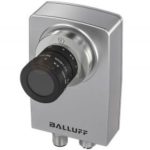
Balluff.imX  300x225At the first Interactive Manufacturing Experience (imX 2011) conference, Sept. 12-14, 2011 in Las Vegas, Tom Rosenberg, director of marketing for Balluff explains the company’s Tool ID products that use RFID technology to integrate the tool room with the factory floor to Sensor Tips’ Randy Frank.

For more information about Balluff Tool ID products, click here.

To watch the video, click here.

Limited Space? Not a Problem for Short Proximity Sensor

April 6, 2011 by  
Filed under Featured, Inductive, Position, Proximity

SupershortyWith its 6-mm package, Balluff claims to deliver the shortest self-contained inductive proximity sensors in the world. The fully integrated SuperShorty sensors do not require additional amplification and include reverse polarity and short circuit protection.

The sensors have a 1.5 mm sensing range with PNP and NPN and normally open and normally closed versions. 

 Three housing styles in metal, stainless steel and plastic, smooth or knurled plastic housings that can be press fit or glued into place and 90º cable add to sensor ability to mount in extremely small spaces.

For more information about Balluff’s SupertShorty proximity sensors, click here.

Pricing Concerns for Proximity Sensors? Check This Out.

February 21, 2011 by  
Filed under Capacitive, Featured, Proximity

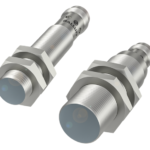
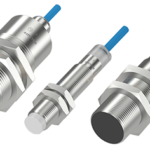
balluff 300x225Should sensor manufacturers proactively develop more cost-effective sensors? Balluff thinks so. Its announcement of a line of economical proximity sensors probably won’t start a price war but it should be good news to users for a variety of applications. The company’s Global.CProx line of capacitive sensors offers many of the same features of it existing sensors including reverse polarity and short circuit protection with enhanced EMC protection. The broad range of tubular M12, M18 and M30 sensors with either M12 connectors or pre-wired cables are available in flush-mount and non-flush mount packages.

For more information about Balluff’s Global.CProx sensors, click here.

Balluff’s Linear Position Transducer Fits Into Small Spaces and Small Budgets

August 19, 2010 by  
Filed under Featured, Position

balluff article 300x188Designed to fit into small spaces, Balluff’s Micropulse PF-series linear transducer has a profile of less than 1-inch high.  The low profile design targets plastic injection and blow molding; woodworking and metalforming; material handling and more.

Using magnetostrictive sensing technology, the unit has a measurable range of 51 to 4572 mm (2 to 180 in) and a scalable, absolute, analog output (0 to 10V, 4 to 20 mA, 0.1 to 20 mA or -10 to 10V). The non-linearity for a stroke length of less than 500 mm is ±200 µm and for a stroke length greater than 500 mm, it is ±0.04% of full stroke. Based on the use of time-tested, field-proven technology, the company claims the units sell for an “economical price.”

For more information about Balluff’s Micropulse Perfect Fit linear position transducer, click here.

Balluff’s IO-Link–based RFID Connects Easily to Networks

August 2, 2010 by  
Filed under Featured, Wireless

Balluff 300x225Balluff’s IO-Link protocol allows users to connect an RFID (Radio Frequency Identification) system to an industrial network via a gateway using standard discrete sensor wiring. Instead of using barcode systems that have high installation costs because of shielded RS232 cables and RS232 communication and an I/O enclosure, the IO-Link-based RFID easily connects with a single IO-Link Expansion Module and four 3-conductor, non-shielded cordsets. The IO-Link block treats the RFID data like a standard I/O point. Running multiple RFID readers from a single I/O block using standard, 3-conductor sensor cables can provide a typical savings of 12% per ID point

For more information about Balluff’s RFID products for IO-Link, click here.

Micropulse: Clean Enough to Eat off of

November 20, 2009 by  
Filed under Level, Liquid Level

The Micropulse SF fill level sensor provides continuous, absolute fill-level measurement in applications that require adherence to the strictest standards of hygiene and cleanliness. 200911 BTLSFapp 72dpi Sensors in a sanitary manufacturing facility must be cost effective, have minimum impact  upon production, and must not negatively impact the cleanliness or quality of the foods (or products) being manufactured. Made from corrosion-free stainless steel with rounded edges and minimal crevices, the Micropulse SF meets the highest international hygiene standards and fulfills strict food industry requirements. Certified to 3-A and EHEDG sanitary standards, the sensor is 100% stainless steel to ensure top sanitation standards and long-term service life.

Benefits include:

  • Chemically neutral for all liquids
  • Compensates for surface foam to deliver reliable, accurate fill level values
  • Adjustment-free installation
  • Easy to clean in installed state (CIP – Clean in Place)
  • Withstands process temperatures up to 130°C (SIP – Sterilization in Place)
  • Standard analog interface ensures wide controller compatibility and flexible installation
  • International certification ensures global acceptance
  • Highly precise measuring technology is ideal for filling or dispensing applications

The industry-standard Micropulse SF fill level sensor uses field-tested magnetostrictive technology to provide highly-precise fill level measurement. Noncontact measurement technology ensures unparalleled reliability and performance. Its continuously-variable analog output signals allow for easy connection to control systems.

www.balluff.com


Dual-sensor, Split-connector Cuts Cylinder Costs

October 21, 2009 by  
Filed under Proximity

by Jack Moermond
Product Specialist, Magnetic Field Sensors
Balluff, Inc.

Three areas where you can look to cut costs on pneumatic cylinder applications include installation time, cables, and the sensors used for detecting the piston’s position. For example, first consider the sensor in a standard cylinder. Most standard cylinders use proximity switches, either internal or external to the aluminum housing that detect special targets or magnets mounted on the piston. Unfortunately, these proximity switches can be relatively expensive, take up valuable space, and are difficult and time-consuming to install. 

DualSensor MIB
A dual-sensor, split-connector system coupled to a multiple-interface block (MIB) in a high-density application reduces the number of wires and potentially doubles the number of cylinder switches that can be used in the same installation.

A better solution is designed around a new dual sensor with a split connector. The configuration has two low-profile, magnetic-field sensors molded together into a single, four-pole connector. Compared to the standard application (where the end of the piston’s stroke is detected in both directions), the dual sensor system does the same job with one less connecting cable, fewer terminations, and less connective hardware, which require less time to install. This dual sensor arrangement can cut an application’s cost by 50%.

Dual Sensor 2
Even in a smaller application, a dual-sensor, split-connector system installed on a cylinder to detect the end of a piston’s stroke can reduce installation time and material costs compared to a standard two-proximity switch arrangement.

Dual Sensor on cylinder
A dual-sensor, split-connector system combines two magnetic-field sensors with a single connector. This approach uses only one four-conductor cable and less installation hardware with fewer terminations than the standard method.

In another installation where numerous cylinder switches are densely packed, multiple interface blocks (MIBs) are typically used to reduce the number of wires needed to return to the control panel. However, you get a bonus when you use a dual sensor system in the same installation: It doubles the number of cylinder switches that can be connected to the same MIB, or it cuts the MIB size in half for the same number of switches. Either way, your cost-cutting goal is realized. 

Balluff
www.balluff.com/vtwin
jack.moermond@balluff.com

::Design World::

Balluff GlobalEye Photoelectric Sensors

December 17, 2008 by  
Filed under Photoelectric

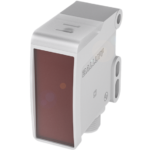
Florence, KY – Balluff is introducing a new series of basic photoelectric sensors that will simplify the entire process of specifying photoelectric sensors. Balluff’s GlobalEye™ series includes three different form factors: 18 mm threaded combination, small block, and standard 18 mm tube, each of which is available in background suppression, diffuse, retroreflective, and thru-beam models. Easy to install and simple to choose from, these sensors will not only provide reliable solutions in countless everyday applications, they will also greatly simplify stocking and maintenance procedures.
balluff%20globaleye
One of these sensing modes will work in almost all general duty applications: Background Suppression sensors are able to sense targets and ignore objects behind them. Diffuse sensors sense the target when it reflects light back to the sensor. Retroreflective types acquire an object when it blocks light coming back to the sensor from a reflector. Highly reliable Thru-beam sensors have an aligned emitter and receiver. The sensor is actuated when a target passes between the emitter and the receiver and blocks light going to the receiver.

www.balluff.com/globaleye