

Four-dimensional (4D) imaging radar is a high-resolution sensing technology that adds vertical information (elevation) to traditional 3D radar (range, … [Read More...] about How does 4D imaging work with radar sensors?
Main Content
FAQs
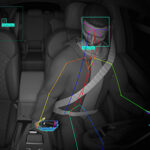
How is radar used for automotive in-cabin sensing?
Automotive in-cabin radar uses 60 (60 to 64 ISM band) GHz or 77 GHz mmWave sensors to monitor vehicle interiors, detecting, locating, and classifying … [Read More...] about How is radar used for automotive in-cabin sensing?
Applications: Automotive
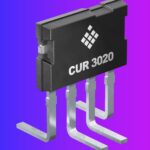
Hall current sensor offers 250 kHz and 500 kHz bandwidth
TDK Corporation has announced the Micronas CUR 3020, a customer-programmable linear Hall-effect current sensor IC with selectable 250 kHz or 500 kHz bandwidth and sensitivity ranging from 4.2 to 67.4 … [Read More...] about Hall current sensor offers 250 kHz and 500 kHz bandwidth
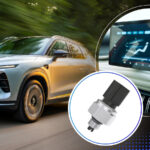
Combined sensing simplifies electric vehicle thermal management
Sensata Technologies has introduced its R290 Pressure + Temperature (P+T) Sensor for electric vehicle thermal management systems using R290 (propane) refrigerant. The sensor combines pressure and … [Read More...] about Combined sensing simplifies electric vehicle thermal management

Dual-axis current sensor cuts displacement error in EV inverters
Texas Instruments (TI) has introduced the TMCS2100-Q1, a multiaxial coreless Hall-effect current sensor for HEV and EV traction inverters. The device measures magnetic fields on horizontal and … [Read More...] about Dual-axis current sensor cuts displacement error in EV inverters

Hall current sensor adds sigma-delta digital output
Melexis has introduced the MLX91229, a conventional-Hall current sensor with a sigma-delta digital output for current sensing from 200 A to 2000 A in electrically noisy automotive environments. … [Read More...] about Hall current sensor adds sigma-delta digital output

Automotive IMU combines synchronized 6-axis motion sensing
STMicroelectronics’ ASM330LHHG1 is an automotive-qualified IMU rated for operation from -40°C to 125°C, combining a 3-axis accelerometer, a 3-axis gyroscope, temperature compensation and 6-channel … [Read More...] about Automotive IMU combines synchronized 6-axis motion sensing
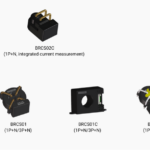
How sensing technologies improve EV connector and contactor safety
Electric vehicle (EV) connectors, contactors, and charging interfaces operate under continuous electrical stress, mechanical loading, and elevated temperatures. With battery voltages approaching 800 V … [Read More...] about How sensing technologies improve EV connector and contactor safety
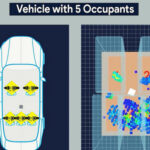
What are the signal processing and interference management considerations for imaging radar?
Imaging radars include technologies like synthetic aperture radar (SAR) and frequency-modulated continuous-wave (FMCW) technology. Key considerations include maintaining high signal-to-noise ratios … [Read More...] about What are the signal processing and interference management considerations for imaging radar?
How does 4D imaging work with radar sensors?
Four-dimensional (4D) imaging radar is a high-resolution sensing technology that adds vertical information (elevation) to traditional 3D radar (range, azimuth, Doppler). By capturing 3D spatial data … [Read More...] about How does 4D imaging work with radar sensors?
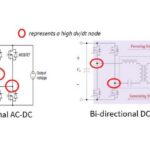
Increased voltage levels and faster switching speeds influence on sensor placement and accuracy in EV systems
The advancements in the EV industry, such as WBG devices and 800 V systems, introduce specific technical challenges for sensor accuracy and physical placement. Higher operational voltages require more … [Read More...] about Increased voltage levels and faster switching speeds influence on sensor placement and accuracy in EV systems
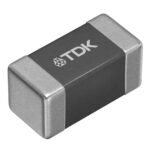
AEC-Q200 NTC sensors support -55 °C to 175 °C
The NTCSP series from TDK Corporation is an expanded line of AEC Q200-compliant NTC thermistors rated for operation from -55 °C to +175 °C. Designed for conductive glue mounting using AgPd terminals, … [Read More...] about AEC-Q200 NTC sensors support -55 °C to 175 °C
Sponsored Content
Low Pressure Filtering of a Pressure Sensor’s Input
The Problem In some applications, high-frequency pressure transients may be present that distort the sensor’s output and degrade its ability to read the underlying changes in pressure. This can especially be a problem in low-pressure applications, such as medical measurements where discerning subtle differences is essential to successful diagnosis and monitoring. A common, well-known solution […]
