Paper and Carbon Nanotubes Combined to Detect Explosive Devices

November 30, 2011 by  
Filed under Chemical Sensor, Featured, Wireless

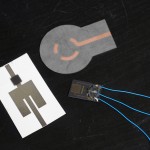
sensor3 300x199Targeting the detection of explosives, such as improvised explosive devices (IEDs), researchers at Georgia Tech Research Institute (GTRI) have developed a prototype sensor that uses carbon nanotubes (CNTs) for the sensing element. The wireless component, a resonant lightweight antenna, is printed on paper or paper-like material using standard inkjet technology.  Researchers think the low-cost sensors could be deployed in large numbers to alert authorities to the presence of IEDs and other explosives.

The newest CNT sensor possesses significantly improved sensitivity to minute ammonia concentrations that should enable the first practical applications to detect trace amounts of hazardous gases in challenging operational environments using inkjet-printed devices.

For more information about GTRI’s prototype wireless sensor, click here.

Make Multiple Wireless Temperature Measurements
October 10, 2011 by  
Filed under Featured, Temperature, Wireless

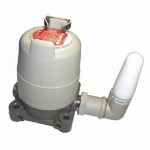
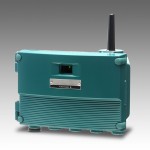
YTMX580 350dpi  PR1005 300x237Using wireless technology, engineers can measure critical data in remote locations within a manufacturing environment without running wires. With Yokogawa’s YTMX580 multi-input temperature transmitter, they can make several measurements. The battery-powered unit has eight analog
input channels, each configurable for thermocouple, resistive temperature detector (RTD), DC voltage and 4-20 mA measurements.

Operating within a frequency range of 2400-2483.5 MHz and a temperature range of -40 to 85°C, the transmitter accepts Pt100, Pt200, Pt500 (IEC751) RTD probes in 2-, 3- and 4-wire configurations. In addition, it can handle B, E, J, K, N, R, S and T (IEC584) thermocouples as well as DC voltages from -10 to 100 mV or -0.01 to 1V.

For more information about the Yokogawa YTMX580 multi-input temperature transmitter, click here.

Measure Relative Humidity and Temperature Without Wires
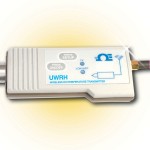
UWRH 2 300x198Wireless is the must-have attribute for many of today’s consumer and industrial products. When you get two for one, so much the better. With Omega’s UWRH-2 wireless relative humidity transmitter users get both relative humidity and temperature measurements. The battery-powered unit transmits these readings as well as signal strength and battery status back to a host receiver up to 120 m (400’) away.

The unit’s temperature range is -17 to 49°C (2 to 120°F) with an accuracy of ±1°C (±1.8°F). The relative humidity range is 2 to 98% RH with accuracy from ±2.5 to ±3.5 % max depending on the temperature range

For more information about Omega’s UWRH-2 wireless relative humidity transmitter, click here.

Touch Sensing in a Remote Keyless Entry System

October 26, 2010 by  
Filed under Capacitive, Featured, Touch Sensing, Wireless

At Convergence 2010, Atmel’s Toby Prescott demonstrates touch sensing in a remote keyless entryatmel1 300x225 system. The capacitive touch sensing capability is provided by the ATA6617, a LIN system in package solution. Atmel’s QTouch Library enables a number of touch applications.

Convergence has been the premier automotive electronics event since 1974. This year’s Convergence had a strong focus on consumer electronics in the vehicle but also brought out the latest products and challenges for future powertrain, safety and other vehicle systems

For more information on Atmel Touch Sensing, click here.

To watch the video, click here.

MicroStrain’s Wireless Sensor Products now Integrate with National Instruments’ LabVIEW
August 4, 2010 by  
Filed under Featured, Wireless

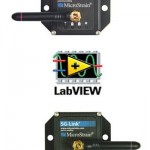
Microstrain NI.article 200x300MicroStrain’s G-Link and SG-Link sensor products now easily integrate with National Instruments’ LabVIEW graphical system design software. The seamlessly connectivity to LabVIEW facilitates data acquisition, graphical display, analysis and data storage for MicroStrain’s wireless acceleration and strain systems.  

For a link to the LabVIEW driver for G-Link click here and for SG-Link click here

Balluff’s IO-Link–based RFID Connects Easily to Networks

August 2, 2010 by  
Filed under Featured, Wireless

Balluff 300x225Balluff’s IO-Link protocol allows users to connect an RFID (Radio Frequency Identification) system to an industrial network via a gateway using standard discrete sensor wiring. Instead of using barcode systems that have high installation costs because of shielded RS232 cables and RS232 communication and an I/O enclosure, the IO-Link-based RFID easily connects with a single IO-Link Expansion Module and four 3-conductor, non-shielded cordsets. The IO-Link block treats the RFID data like a standard I/O point. Running multiple RFID readers from a single I/O block using standard, 3-conductor sensor cables can provide a typical savings of 12% per ID point

For more information about Balluff’s RFID products for IO-Link, click here.

Ease Temperature Concerns: We’ll Call You
May 13, 2010 by  
Filed under Featured, Temperature, Wireless

temperature alert1Adding to its USB, and Wi-Fi editions, Temperature@lert Cellular Edition monitors the ambient temperature in a server room or other critical area and alerts the user via email, telephone and text message when the temperature rises or falls outside of an acceptable range. The pre-calibrated digital temperature sensor is accurate to within ±0.5°C with a range of -40°F to +200°F. Plugging the Temperature@lert Cellular Edition into a power outlet initiates transmission of temperature readings over the AT&T and T-Mobile cellular phone networks to the company’s 24/7 monitoring system and dashboard website.

For more information on Temperature@lert Cellular Edition go to: http://www.temperaturealert.com/Remote-Temperature/Temperature-Alert-Cellular-Sensor.aspx

Wireless Position Sensor

May 11, 2010 by  
Filed under Position, Wireless

Map to LV 300x225Honeywell Sensing and Control now offers the XYR6000 Wireless Position Sensor that works with its OneWireless™ systems. Operating at 2.4 GHz Discrete Sequential Spread Spectrum (DSSS),  the unit has a data rate of 250 Kbps and nominal signal range of 305m (1000ft.) between Field Sensor and Infrastructure unit. The analog output has an accuracy of +/- 5% over 250° when centered between slip clutch. The unit requires a maximum operating torque of 0.50 nM (0.369 lb-ft) and has an overtravel of 90° max. Calibration is performed electronically by setting values for start point and range. The unit requires two C Cell Lithium (3.6V Li-SOCl2) non-rechargeable batteries.

In addition to monitoring valve position status, the wireless sensor can also be used for manual process valve position, safety shower and eye bath notification, tank overflow alarms, , gate/door position, and other applications.

For more information on the XYR6000 Wireless Position Sensor go to: http://sensing.honeywell.com/index.cfm/ci_id/157437/la_id/1.htm

US Navy Awards MicroStrain a Phase I SBIR Contract

May 15, 2009 by  
Filed under Wireless

Williston, VT – The US Navy (NAVAIR) recently awarded MicroStrain, Inc. a Phase I SBIR contract worth $80,000 to develop a wireless system to measure buffet loads on the control surfaces of in-service aircraft. The data obtained will be used for structural life tracking of individual aircraft.

microstrain nave

Structural monitoring of Navy aircraft is of critical importance as the fleet ages. The highly transient nature of buffet loading on control surfaces makes it difficult to measure using conventional sensors.

“We will solve this problem by combining a network of time-synchronized wireless sensors with integrated microelectronics for static and dynamic loads sensing, data recording, communications, and energy harvesting. Our proposed sensors possess major advantages, including: sealed stainless steel packaging, full calibration prior to installation, rapid installation, and locations which enable a full computation of control surface forces and moments”, said Steve Arms, President of MicroStrain.

MicroStrain
www.microstrain.com