
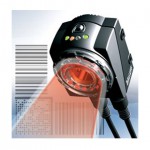
Vision Sensor Reads Linear and Data Matrix Codes
May 19, 2011 by Randy Frank
Filed under Featured, Photoelectric, Vision
With its Sharpshooter ID vision sensor, Balluff now has an ID version designed to read a large range of linear bar codes and 2D Data Matrix codes, as well as optical character verification (OCV).
The vision sensor can read more than 10 types of linear bar codes, including PDF417 and 2D Data Matrix codes. The Data Matrix code reader reads both printed and direct part mark (DPM) based marks. Since alphanumeric characters like date codes or expiration codes can typically coexist with barcodes, the ID version also has an OCV tool to verify these values.
For more information about Balluff’s Sharpshooter ID vision sensor, click here.
Baumer Introduces Complete Line of Capacitive Sensors
April 29, 2009 by Editor
Filed under Liquid Level
Southington, Conn. — Baumer has introduced a complete line of Capacitive Sensors capable of penetrating through packaging materials such as plastics, glass, cardboard, foam, and other substrates. These sensors are available in a range of housing sizes and designs, and offer extended sensing distances to facilitate installation.

Installed outside of container walls, Baumer Capacitive Sensors do not require direct contact with the target substrate, a feature that protects the sensor from damage and ensures process safety and sensor life expectancy. This non-invasive method of detection also ensures that the sensor’s housing cannot contaminate the target material.
Baumer Capacitive Sensors are available in cylindrical, rectangular and special designs. Models are available for use in limited space applications, and for performance in ambient and elevated temperatures. Possible target substrates include plastics, glass, ceramics, porcelain, clay, stone, wood, paper, cardboard, pellets, powders, and foods. These sensors are used in packaging, PCB fabrication, printing, rubber/plastics fabrication, robotics and handling, transportation, warehousing, food and drug processing, medical device manufacturing, cosmetic production, wood processing, metalworking, oil and gas processing, water treatment, and textile production.
Baumer
www.baumerelectric.com/usa
Cognex Introduces DataMan 200 ID Reader
April 29, 2009 by R. Nelson Parrish
Filed under Image
Cognex Corporation (NASDAQ: CGNX) announces the newest addition to its DataMan® family of ID readers. The new DataMan 200 adds Ethernet connectivity and liquid lens technology to the world’s smallest high performance fixed-mount reader. These new features enable faster communication speed, easier integration with factory controls, and software-driven autofocus for easy, hands-free setup.

Ethernet connectivity gives DataMan 200 users the advantage of real-time data and image transfer, and easier integration with plant controllers and information networks.
Liquid lens technology, an optional feature of the DataMan 200, provides greater focal range, ease of setup, and faster response time. This unique technology adjusts the camera’s focus by applying an electrical charge to fluid within the lens.
With liquid lens technology, autofocus is achieved with a single software command. The lens also provides exceptional depth of field and field of view range, and, because it has no moving parts to malfunction or break down with use, the system is extremely rugged and resistant to shock, vibration and wear.
Setup is simplified with the use of two laser aimers. The laser targets are easily seen through the entire depth of field, enabling operators to quickly position the code to the reader.
Like the DataMan 100, the new system features an easy-to-use interface for setting up the application, and supports a wide range of 1D and 2D codes including UPC/EAN/JAN, Code 39, Code 128, Code 93, Interleaved 2 of 5, Data Matrix, QR Code, and micro QR Code.
Cognex
www.cognex.com/dm200
An Alternative to Vision Systems: A Touch Screen Image Sensor
March 12, 2009 by Editor
Filed under Image, Photoelectric
by Brent Evanger, Banner Engineering, Sr. Application Engineer—Vision Sensors
When an inspection application requires more sophisticated data acquisition than that provided by a traditional photoelectric sensor, many application engineers will choose a vision system. Through it, they can obtain image-based data and identify label orientation, part presence and arrangement, and other features. But for some of these applications, a full vision system may not be required. Instead, you can use a compact touch screen image sensor with no PC or additional electronics required.

Label Orientation: The touch screen image sensor lets you set inspection parameters on the spot, and then examine a target object, such as a salad dressing bottle, to verify label placement and orientation.
A touch screen image sensor can combine the capabilities of three separate sensors into one housing. One sensor is a match sensor. It compares the target object to a stored reference point, identifying parts of irregular shape, alphanumeric characters, etchings and labels at rapid production speeds. An area sensor identifies target features within a region of interest, ideal for detecting drilled holes on a metallic component or inspecting blister packs, and verifies that all
features are correctly sized and located. The third sensor has a similar purpose—examining an area for specific features—but offers tools that adjust for motion.

Drilled Hole Inspection: The image sensor features integrated lighting to create contrast between target features (drilled holes) and their background (metal plates), allowing any reject parts to be readily identified.
These tools allow the sensor to detect objects of varying position and orientation on the production line. The image sensor also incorporates integrated lighting and adjustable lenses to optimize image contrast, as well as accommodate changing plant conditions.

Injection Molding Verification: Once the sensor is programmed, it compares the obtained image—in this case, a plastic container—to a reference pattern, confirming its size and shape match the parameters set. If the target object fails this inspection, it is rejected from the production line.
The sensor’s touch screen LCD display is used for setting up an inspection and modifying parameters. Once you select the sensor type (match, area, or area with motion), it captures a sample image. From this point, you configure the sensor by adjusting the region of interest, setting inspection parameters, and designating the minimum and maximum pass count. The final setup configuration and logged inspection results can be downloaded from the sensor to a USB drive through the sensor’s USB port. To minimize system downtime, you can set new application parameters offline through the sensor’s software emulator, and then upload these new configurations onto the sensor using the USB drive.
Banner Engineering
www.bannerengineering.com
IP 69K-rated Sensors for Harsh Washdown Environments
February 16, 2009 by R. Nelson Parrish
Filed under Vision

VeriSens smart vision sensors are equipped with IP 69K-rated stainless steel housings, shatterproof glass, special connectors and seals that protect the devices from damage in high temperature/high pressure washdown environments.
The sensors are suitable for discrete automation applications in a range of industries, including food/beverage, pharmaceutical, medical and cosmetic processing. Using contour-based algorithms, VeriSens smart vision sensors provide edges that are more stable and reliable than those found using photometric (gray scale) methods. Using 656 x 494 pixel CCD imaging, the sensors calculate 2-D position correction and provide data on the position and angle of the target. They also perform simple measurement and location calculations. An RS485 interface communicates with a computer or control device to transmit and receive data. An Ethernet version is also available for real time remote image monitoring.
Baumer Inc.
www.baumer.ca
NVision Launches the MAXOS XR
NVision announces the launch of the MAXOS XR (Extended Range), which expands the measurement capabilities for multiple vane applications. The XR augments the MAXOS multi-axis optical CMM product line, already the industry standard for non-contact measurement of turbine blades due to its speed, accuracy and ability to scan polished or machined surfaces without any coating.

Nozzle or vane segments of a turbine stator are normally impossible to inspect using optical measurement and notoriously time-consuming to inspect using conventional CMM technology. The problem is the limited space available between individual blades and the resulting angles of approach. Inspection by conventional CMM requires long custom-shaped touch probes that need regular recalibration and is often inaccurate due to ball-offset or cosine error.
The MAXOS XR addresses these problems. The sensor’s concentrated light spot can measure at a standoff of 8 inches with an angle of incidence to the surface of as little as 15 degrees. With this technical breakthrough, the MAXOS XR can scan between individual vanes and measure complete cross-sections of each blade segment at all required section heights.
Another unique feature for the measurement of nozzle segments is the ability of the MAXOS XR to measure the position and depth of slot seals, a notoriously difficult operation to automate.
Cognex Expands Capabilities of Checker Vision Sensors
Cognex® Corporation (NASDAQ – CGNX) has expanded its Checker vision sensor product line with the Checker® 252 model. The 252 includes all inspection capabilities of the award-winning Checker vision sensor family, plus additional software sensors that verify height, width, and diameter and deliver reliable pass/fail results on high-speed production lines.

Key to the simplicity of the Checker 252 is its One-Click Setup™. By simply clicking on the center of the part feature to be inspected, an image of a familiar caliper appears and locks on the edges of the part feature, sets the minimum and maximum thresholds, and learns edge polarity…all automatically.
As with other Checker models, the 252 is available with the Cognex SensorViewTM 350, a compact, industrial, panel-mount display. The Checker 252 will be available in November, 2008. For more information, please visit http://www.cognex.com/checker252.

