
• Skip to primary navigation
  • Skip to main content
  • Skip to primary sidebar
  • Skip to footer
  • Subscribe
  • Advertise

Sensor Tips

Sensor Product News, Tips, and learning resources for the Design Engineering Professional.

  • Motion Sensing
  • Vision systems
    • Smart cameras
    • Vision software
    • Lighting
    • Optics
  • Pressure
  • Speed
  • Temperature
  • Suppliers
  • Video
    • EE Videos
    • Teardown Videos
  • EE Learning Center
    • Design Guides
    • Tech Toolboxes

How are multi-axis sensors improving product development?

January 20, 2022 By Randy Frank Leave a Comment

With a multi–axis sensor design, a single load cell sensor can measure 3 axes of force and 3 torque moments simultaneously. These sensors consist of multiple bridges that precisely measure the applied force from one direction with minimal crosstalk from the other axes. Using a multi-axis sensor, forces can be measured simultaneously in three mutually perpendicular axes with the 6-axis load cells also measuring torque around those axes.

The design and test process for a simple chair used in a kitchen table set demonstrates how multi-axis force data helps improve product design. Typically, these chairs are stress tested to simulate the effects of a person sitting down hundreds of thousands of times over many years. According to Keith Skidmore, Custom Solutions Engineer & Sales Director at Interface, “In the past, force sensors were used to simply measure the effects of force on the legs of the chair or the back rest.”

Since all the forces could not be measured at the same time, unknown variables were still present. As a result, the data did not provide a complete picture of the effects of force.

With a multi-axis sensor, the chair designer or engineer can measure force in every direction simultaneously to gather data on the stress test’s impact for the whole chair. Using this data, the user can identify weak points or flaws that wouldn’t have been identified before. This data is critical to improving the quality and reliability of the chair.

This same approach can be applied to the development of other, more complex products. In fact, data-driven test and measurement is at the forefront of product development, especially in highly regulated markets like aerospace, automotive, medical and industrial. Today, one of the most significant applications for multi-axis sensors occurs in manufacturing facilities that want to integrate more autonomy and robotic processes.

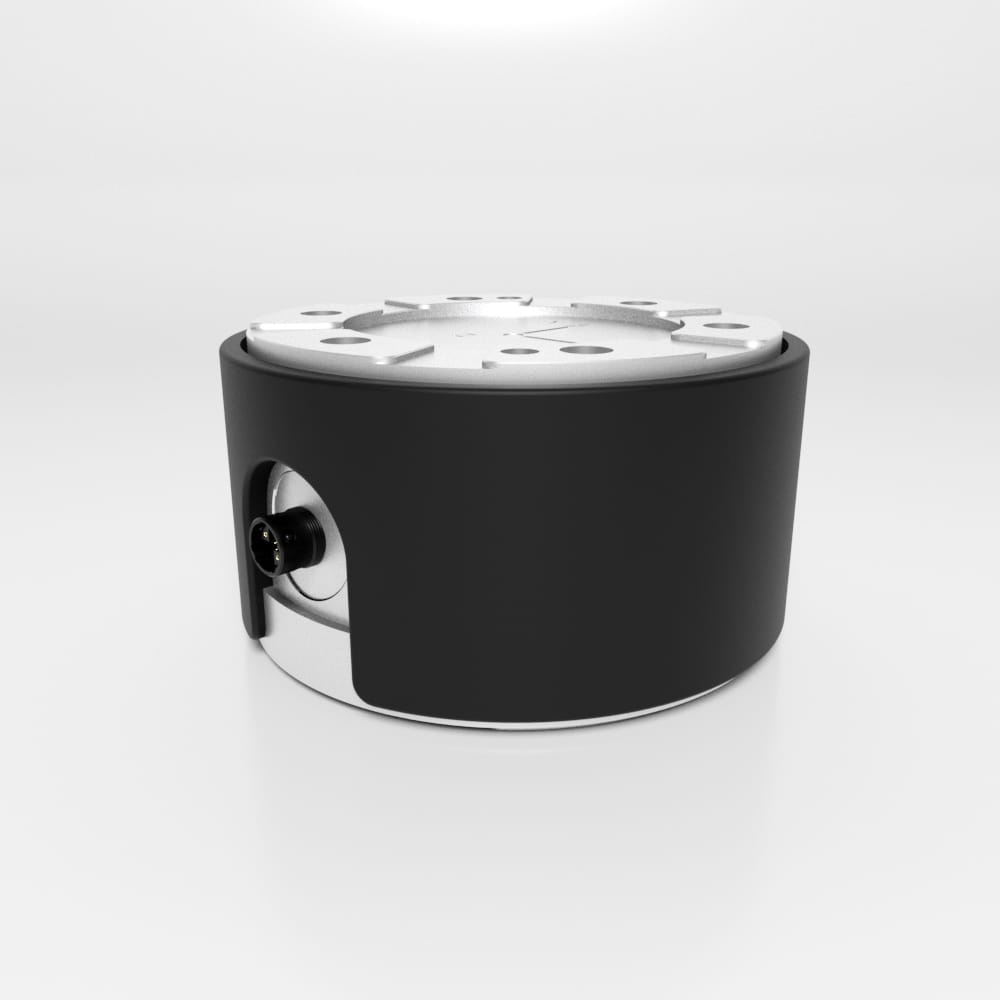
The Interface 6A Series 6-Axis Standard Capacity Load Cell is an example of a product to perform these tests. It includes a 36-term coefficient matrix for calculating the load and torque values in each axis. To simplify data analysis, an 8-channel amplifier with a USB PC interface is also available.

Filed Under: Featured, Force, Frequently Asked Question (FAQ), Load cell, Torque Tagged With: interface

Reader Interactions

Leave a Reply

You must be logged in to post a comment.

Primary Sidebar

Featured Contributions

Automotive sensor requirements for software-defined vehicles: latency, resolution, and zonal architecture

High-current, low-impedance systems need advanced current sensing technology

A2L refrigerants drive thermal drift concerns in HVAC systems

Integrating MEMS technology into next-gen vehicle safety features

Fire prevention through the Internet

More Featured Contributions

EE TECH TOOLBOX

“ee
Tech Toolbox: Sensors
In this Tech Toolbox, we cover some of those technologies driving the next generation of connected systems, including ultra-low-power sensing strategies that extend node battery life, and 60 GHz CMOS radar for contactless health and presence detection.

EE LEARNING CENTER

EE Learning Center
“sensor
EXPAND YOUR KNOWLEDGE AND STAY CONNECTED
Get the latest info on technologies, tools and strategies for EE professionals.

RSS Current EDABoard.com discussions

  • Python script for SPI bridge
  • Calculating the ripple current for a capacitor in a vfd
  • May I ask: Is it possible to encounter such issues or customer demands as below in reality?
  • Understanding simple driver schematic
  • design example for commercial high speed pcb

RSS Current Electro-Tech-Online.com Discussions

  • Why aren’t the power windows in my 2006 Volkswagen Polo 2006 working despite repairing the control unit circuit board?
  • Relay question
  • Battery discharger
  • Difference between TTL, RS232 and RS485
  • Phone Charger 5v to 12v

EE ENGINEERING TRAINING DAYS

engineering
“bills

RSS Featured White Papers

  • 4D Imaging Radar: Sensor Supremacy For Sustained L2+ Vehicle Enablement
  • Amphenol RF solutions enable the RF & video signal chains in industrial robots
  • Implementing Position Sensors for Hazardous Areas & Safety

Footer

EE WORLD ONLINE NETWORK

  • 5G Technology World
  • EE World Online
  • Engineers Garage
  • Analog IC Tips
  • Battery Power Tips
  • Connector Tips
  • EDA Board Forums
  • Electro Tech Online Forums
  • EV Engineering
  • Microcontroller Tips
  • Power Electronic Tips
  • Test and Measurement Tips

SENSOR TIPS

  • Subscribe to our newsletter
  • Advertise with us
  • Contact us
  • About us

Copyright © 2026 · WTWH Media LLC and its licensors. All rights reserved.
The material on this site may not be reproduced, distributed, transmitted, cached or otherwise used, except with the prior written permission of WTWH Media.

Privacy Policy