
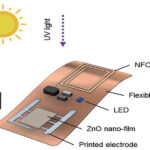
Zinc oxide (ZnO) is a common ingredient in sunscreen lotions. Less well-known is the fact that it’s also a wide band gap (WBG) semiconductor (3.4 eV). As a nanomaterial, ZnO is being used to develop a wide variety of sensor technologies. Sensor applications for ZnO include health monitoring, chemical sensing, biomedical, and environmental sensors. Some […]
Medical
Open-frame push type solenoids offer customizable options
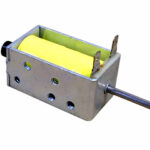
Push Type Solenoids from Magnetic Sensor Systems (MSS) include a series of 18 different low-cost open-frame solenoids to select from based on the Voltage, Duty Cycle, Force of up to 96 oz (26.7 N) and stroke requirements of the user. These clean, high-efficiency, low-cost S-18-100-QH Open Frame Push Type Solenoids can be operated at a […]
Flexible artificial intelligence optoelectronic sensors towards health monitoring

Researchers at Tokyo University of Science (TUS) have developed a flexible paper-based sensor composed of nanocellulose and zinc oxide (ZnO) nanoparticles that operate like the human eyes and brain. The sensor is energy-efficient, responds to optical input in real-time, and is both flexible and easy to dispose of, making it ideal for health monitoring applications. […]
A comprehensive exploration of IEC 60601-1-8 for medical alarm systems

In the intricate web of healthcare technology, the seamless integration of medical alarm systems plays a pivotal role in ensuring patient safety and the efficient functioning of medical equipment. Due to the mission-critical nature of these medical alarms, it should come as no surprise that additional regulations govern them, specifically IEC 60601-1-8—a standard that delineates […]
Pull type solenoids features 16 standard models
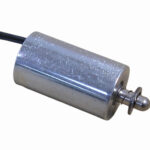
The S-63-38 Series of Pull Type Tubular Solenoids has been released by Magnetic Sensor Systems (MSS). This series of 0.38 in. diameter solenoids features 16 standard off-the-shelf solenoids to select from based on the Voltage, Duty Cycle, Force, and Stroke requirement of the user. These miniature solenoids featuring a 0.38 in. diameter have a 0.66 […]
Medical buzzers are compliant with IEC 60601-1-8 alarm signal requirements

CUI Devices’ Audio Group announced a new line of medical buzzers compliant with the alarm signal requirements of IEC 60601-1-8. The CPIM family is a range of piezo audio indicator buzzers capable of producing low, medium, and high-priority tones for general medical use as well as tones for specific medical applications, including ventilator, oxygen, and cardiovascular […]
Pressure sensors for medical application offer fast response time
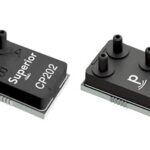
Superior Sensor Technology announced two new CP Series pressure sensors for Positive Airway Pressure (PAP) devices used in sleep apnea, COPD, Asthma, and home ventilator applications. Based on Superior Sensor’s highly integrated CP Series dual pressure sensor architecture, the new CP202 and CP302 closed-loop control functionality and overpressure indicator enable manufacturers to easily upgrade their PAP […]
Microcontrollers focus on sensors with I3C bus

Microchip Technology has released its PIC18-Q20 family of microcontrollers (MCUs), the industry’s first low pin count MCUs with up to two I3C peripherals and Multi-Voltage I/O (MVIO). Available in 14- and 20-pin packages as small as 3 x 3 mm, the PIC18-Q20 MCUs are a compact solution for real-time control, touch sensing, and connectivity applications. The MCUs […]
What is an oximeter?
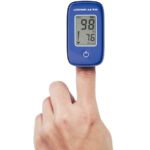
Unlike an oxymoron (äksəˈmôrˌän: a combination of contradictory words), a (pulse) oximeter (äkˈsimidər) is a sensing technique to measure oxygen saturation in a person’s peripheral (capillary) blood (SpO2). Using pulses in the capillaries of the tested area, the noninvasive measurement helps to evaluate a variety of medical conditions that affect the function of the heart […]
